


Unpacking the 8.3% Offer
Several small finance banks (SFBs) are currently at the forefront of offering high interest rates on fixed deposits, with some providing rates as high as 8.3% for senior citizens. For instance, Jana Small Finance Bank has been noted for offering this
rate on FDs with a tenure of two to three years. These offers stand out significantly when compared to the rates provided by larger public and private sector banks, which typically hover between 7% and 7.75%. This substantial difference is designed to attract new customers and grow the deposit base of these relatively newer banking institutions. The appeal is clear: for a retiree, a higher interest rate translates directly into more monthly income and a more comfortable financial cushion.
The 'Rate vs. Access' Dilemma
The central trade-off highlighted by these attractive rates is one of rate versus access. Larger, more established banks offer unparalleled convenience through extensive branch and ATM networks, comprehensive digital banking platforms, and a long-standing sense of familiarity. In contrast, many small finance banks have a much smaller physical footprint. For a senior citizen who may be less comfortable with digital-only banking or prefers in-person service, this lack of widespread branches can be a significant drawback. The term 'access' also extends to the perceived stability and trust that legacy banks have built over decades. While SFBs are gaining ground, they are still building that same level of public confidence.
Understanding Small Finance Banks
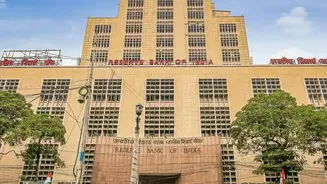
So, what exactly is a Small Finance Bank? Licensed by the Reserve Bank of India (RBI), SFBs have a mandate to improve financial inclusion by providing basic banking services to underserved sections of the population, such as small businesses, micro-industries, and farmers. To fund their lending activities to these sectors, they need to attract retail deposits, and offering higher interest rates is their primary strategy to compete with larger banks. It is crucial to understand that SFBs are scheduled commercial banks and are regulated by the RBI, just like their larger counterparts. This means they are subject to the same stringent regulatory oversight, which provides a layer of security for depositors.
The Ultimate Safety Net: DICGC Insurance
The most important factor for any depositor considering an FD, regardless of the bank, is the safety of their principal. This is where the Deposit Insurance and Credit Guarantee Corporation (DICGC), a subsidiary of the RBI, comes in. DICGC provides insurance cover for bank deposits up to ₹5 lakh per depositor, per bank. This insurance covers all types of deposits, including savings, current, and fixed deposits, and it applies equally to Small Finance Banks and large commercial banks. This means that if you deposit up to ₹5 lakh in an SFB, your money is just as protected as it would be in SBI or HDFC Bank. This government-backed guarantee is the great equalizer, ensuring that depositors' capital is secure up to the specified limit.
Making an Informed Decision
Chasing the highest interest rate can be tempting, but it shouldn't be the only factor in your decision. For senior citizens, the choice between a large bank and an SFB should be based on individual needs. If your total fixed deposit investments are well over the ₹5 lakh DICGC limit, it is prudent to diversify your funds across different banks to ensure full insurance coverage. If you value the convenience of a nearby branch and a long-standing banking relationship, a slightly lower rate from a traditional bank might be a price worth paying for peace of mind. However, if you are comfortable with digital banking and your deposit amount is within the ₹5 lakh limit, an SFB offering a rate like 8.3% can be a smart and safe way to maximize your returns.