





Zone Your Shelves by Frequency of Use
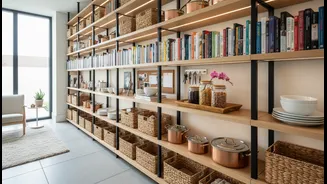
The golden rule of accessible storage is to organize by frequency of use, not by item type alone. Think of your cabinets and shelves in three zones. The prime real estate—the shelves between your shoulders and knees—should be reserved for items you use every
day, like your favourite tea mugs, daily plates, and go-to spices. The higher shelves are perfect for things you use less frequently, such as special occasion serveware, extra linens, or seasonal decor. Lower cabinets are ideal for heavy items like pots, pans, and appliances that can be difficult or dangerous to lift from overhead.
Invest in Pull-Down Shelving Systems
For those high-up cabinets that seem almost useless, a pull-down shelving system can be a game-changer. These mechanisms allow you to store items high up, then smoothly bring the entire shelf down to counter-level with a gas-assisted lift. This makes the contents of your upper cabinets completely accessible without needing a stool. It’s an ideal solution for storing lighter items like spice jars, medicines, or breakfast cereals, transforming a hard-to-reach space into a functional part of your daily routine.
Use Clear Bins and Tiered Organizers
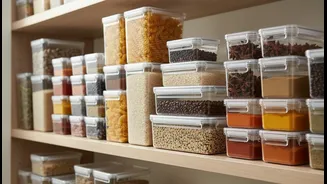
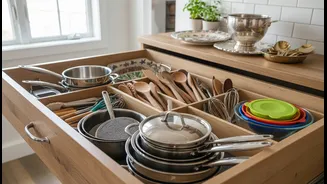
Out of sight is out of mind, especially in deep or high cabinets. Combat this by using clear, stackable containers. This allows you to see what’s inside at a glance without having to pull everything out. For deep shelves, tiered or stepped organizers are invaluable. They elevate items in the back, ensuring nothing gets lost in the abyss and you can easily see your inventory of canned goods or spices. For corner cabinets, a Lazy Susan can bring everything from the back to the front with a simple spin.
Think Beyond Traditional Shelves
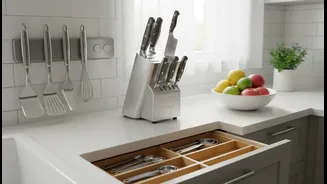
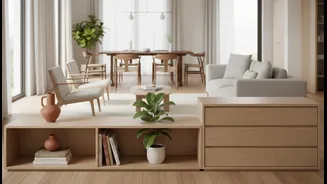
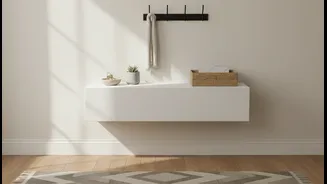
Vertical storage isn't just about cabinets. Wall space is one of the most underutilized areas in a home. Consider installing a pegboard with hooks and small shelves over a desk or in the kitchen to keep frequently used tools, utensils, or craft supplies within arm's reach. Wall-mounted racks are perfect for items like thalis, chopping boards, or everyday cookware, freeing up precious counter and cabinet space. Even the back of a pantry or closet door can be fitted with organizers for spices, cleaning supplies, or shoes.
Create Accessibility with the Right Tools
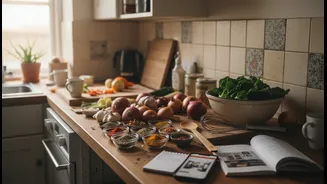
Sometimes, the simplest solution is the best. Keep a sturdy, lightweight step stool nearby for accessing those higher shelves that store semi-frequently used items. For very high ceilings, a rolling library ladder can be a stylish and practical addition, especially in kitchens or home libraries. The key is to make sure your storage system works for you. If an item is used daily, it should require minimal effort to access. Don't be afraid to rearrange your entire kitchen or closet based on what you actually use, rather than how you think it should be organized.