




The Case for Robots: Our Tireless Emissaries
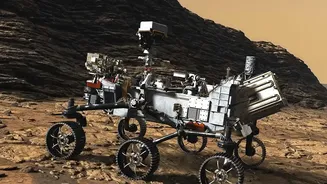
The argument for robotic exploration is built on a foundation of safety, cost, and endurance. Robots are immune to the life-threatening dangers of space, including cosmic radiation and the physiological toll of microgravity. They don't need food, oxygen,
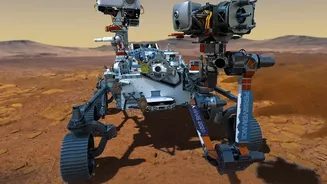
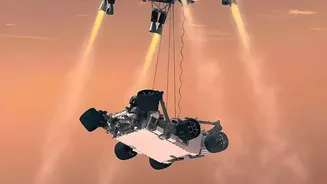
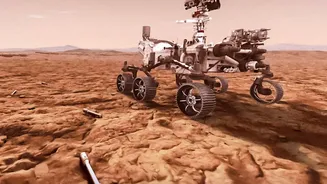
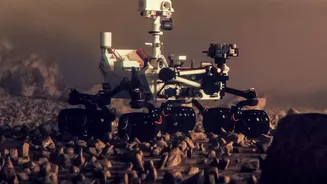
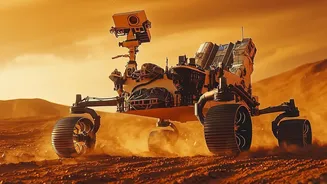
or a return ticket, which dramatically reduces mission complexity and cost. A crewed mission to Mars could cost upwards of $600 billion, whereas robotic missions like NASA's Perseverance rover come in at under $3 billion. These tireless explorers can operate for years, even decades, beyond their initial mission parameters, continuously gathering data in harsh environments. With advancements in AI, rovers can now navigate treacherous terrain, make independent decisions to avoid hazards, and identify scientifically interesting targets without real-time commands from Earth, overcoming significant communication delays. They serve as our resilient proxies, doing the dangerous, repetitive, and patient work of planetary science.
The Human Element: Unmatched Adaptability
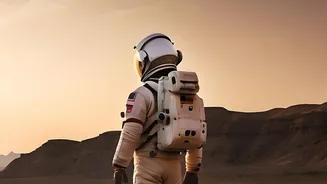
Despite the strengths of machines, human explorers possess a crucial advantage: unparalleled adaptability. An astronaut can make intuitive leaps, troubleshoot complex, unforeseen problems, and perform a wide range of tasks far more quickly than a remote-controlled or even an autonomous robot. While a rover might move at a crawl, carefully planning each movement, a human can walk, climb, and react to a discovery in seconds. This on-the-spot ingenuity is invaluable. An astronaut with a simple tool could achieve in minutes what might take a rover months, as seen with the struggles of the InSight lander's heat probe. Furthermore, humans are the ones asking the scientific questions; being physically present allows for a level of interaction, interpretation, and follow-up that robots cannot yet replicate. This ability to observe, reason, and act on instinct can lead to unexpected discoveries that a pre-programmed machine might overlook.
Scientific Return: Speed vs. Precision
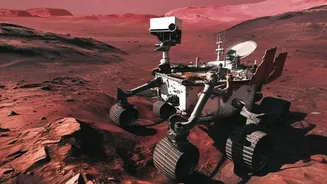
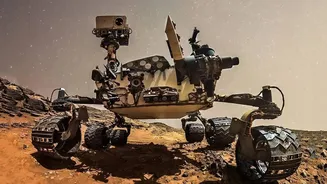
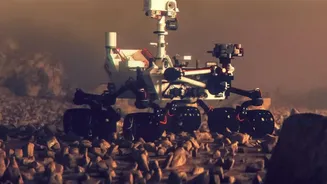
When it comes to the quality and quantity of science, the debate intensifies. Robotic missions have been revolutionary. Rovers like Curiosity and Perseverance have fundamentally altered our understanding of Mars, discovering evidence of ancient lakes, organic molecules essential for life, and environments that could have been habitable. These machines, equipped with sophisticated onboard labs, perform detailed chemical analysis and pave the way for future questions. However, the process is slow. Proponents of human exploration argue that a single crewed mission could generate more scientific data than all previous robotic missions combined. A human geologist on Mars could identify promising samples, perform complex experiments, and synthesize information in ways that would vastly accelerate the pace of discovery. The trade-off is between the slow, steady, and precise data collection of robots and the rapid, versatile, and potentially more insightful work of human scientists on the ground.
A Hybrid Future: Robots as Human Pathfinders
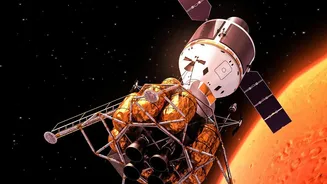
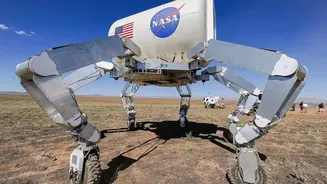
Ultimately, the choice may not be 'either/or' but 'how and when'. The dominant view is that robots and humans will work in partnership. Robotic missions are essential precursors, acting as scouts and pathfinders that map the terrain, identify resources like water ice, and test technologies needed for human survival. Autonomous systems are already being designed to help build habitats and infrastructure before astronauts even arrive. This collaborative model leverages the strengths of both approaches. Robots can perform the high-risk initial exploration and logistical setup, making subsequent human missions safer and more efficient. In this vision, robots handle the dangerous and routine tasks, freeing up human astronauts to focus on complex, high-value scientific work and critical decision-making that only they can perform. This symbiotic relationship is seen as the most logical and effective path to establishing a sustainable human presence on Mars and beyond.