






Why These Icy Moons?
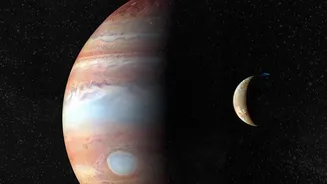
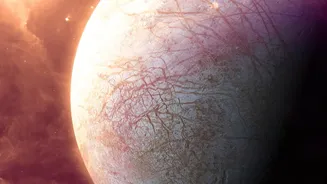
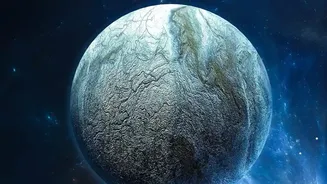
Before searching for life, scientists first had to identify worlds with the necessary ingredients. Europa and Enceladus both meet the key requirements: liquid water, an energy source, and the right chemical building blocks. Evidence strongly suggests
both moons have global saltwater oceans hidden beneath their icy shells. For energy, the immense gravitational pull from their parent planets, Jupiter and Saturn, creates tidal forces that flex and heat the moons' interiors, potentially powering hydrothermal vents on the seafloor. On Earth, these same kinds of vents teem with life, independent of sunlight. Finally, missions like NASA's Cassini have confirmed that Enceladus's ocean contains organic molecules—the carbon-based compounds essential for life as we know it.
Scanning the Ice Shell
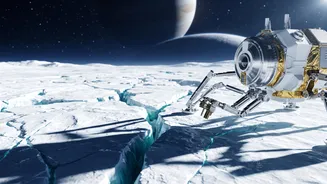
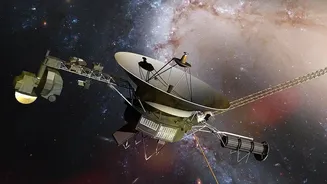
The first major challenge is understanding the ice itself. Probes can't simply land and drill—not yet, anyway. Instead, missions like NASA's Europa Clipper, which launched in October 2024, use a suite of remote-sensing instruments to perform a planetary-scale ultrasound. The key technology is ice-penetrating radar. Instruments like REASON on Europa Clipper will bounce radio waves through the ice shell. By analyzing the returning signals, scientists can measure the ice's thickness, map its internal layers, and even identify pockets of liquid water trapped within the shell. The radar works because it easily penetrates ice but stops when it hits liquid water, providing a clear signal of where the ocean begins.
Catching a 'Free Sample'
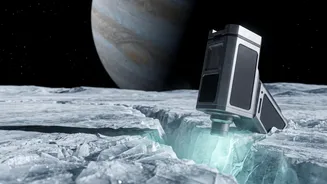
Enceladus offers a tantalizing shortcut. The moon famously erupts giant plumes of icy particles and water vapor from its south pole, spraying material from its subsurface ocean directly into space. This gives spacecraft a 'free sample' to analyze without ever needing to land. The Cassini mission flew through these plumes and detected water, salts, and organic chemicals. Future missions, such as the proposed Enceladus Orbilander, would be designed specifically to fly through these plumes multiple times, equipped with highly sensitive instruments to search for complex biomolecules. Europa is also believed to have plumes, and Europa Clipper's instruments are ready to study them if they are encountered.
The Hunt for Biosignatures
Probes aren't looking for little green microbes swimming past the camera. Instead, they search for 'biosignatures'—subtle but complex chemical evidence of life. This is the primary job of instruments called mass spectrometers, like MASPEX and SUDA on the Europa Clipper. These instruments can 'taste' the particles in the plumes, separating them by mass to identify their chemical composition. Scientists are looking for specific patterns, such as a high concentration of amino acids or fatty acids, which are the building blocks of proteins and cell membranes. Another key biosignature would be finding gases like methane in a state of chemical imbalance, suggesting something—like a metabolic process—is constantly producing it. Recent research shows that modern instruments are so sensitive they could potentially identify the chemical fingerprint of cellular material from just a single grain of ice.
Confirming the Ocean
While radar peers into the ice, other instruments confirm the ocean's existence and properties from afar. Europa Clipper's magnetometer will measure the magnetic field around the moon. A global ocean of salty water would interact with Jupiter's powerful magnetic field, creating a distinct, secondary magnetic field within Europa. Detecting this induced field would not only confirm the ocean is there but also allow scientists to estimate its depth and saltiness. The Plasma Instrument for Magnetic Sounding (PIMS) works alongside the magnetometer to distinguish the ocean's signal from interference caused by charged particles, ensuring the measurements are precise.