







Meet the Magenta World
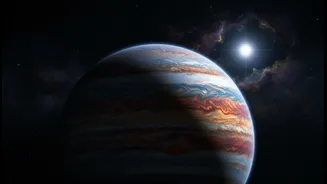
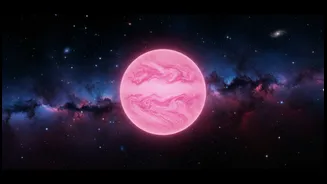
The celestial body in question is officially known as GJ 504 b. Discovered back in 2013, it quickly earned its colorful nickname because of its appearance in infrared light, glowing with a hue reminiscent of a dark cherry blossom. This glow isn't from
reflected light but from the planet's own residual heat, a souvenir from its fiery formation billions of years ago. But there's a catch: the 'pink' is only visible in the infrared spectrum. To the human eye, the planet would likely appear a more conventional brown or blue. The object itself is a puzzle. At about 25 times the mass of Jupiter, it straddles the line between being a massive gas giant and a brown dwarf, a kind of 'failed star'. Because of this ambiguity, scientists often refer to it simply as a 'planetary-mass companion' to its sun-like star. Its orbit is also unusual, situated much farther from its star than Jupiter is from our sun, challenging long-held theories about how giant planets are formed.
Webb Lends Its Powerful Eye
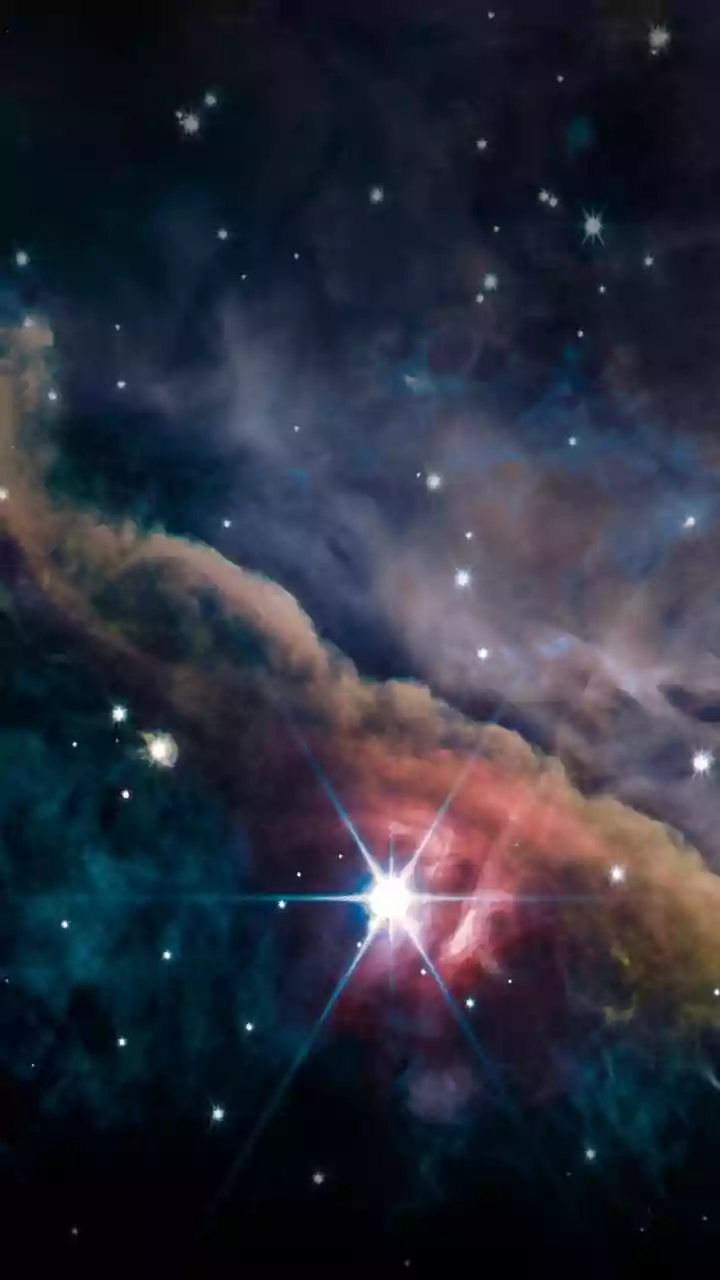
For over a decade, GJ 504 b has been a tantalizing but frustrating target for astronomers. It is one of the coldest such objects ever directly imaged, with a temperature of around 550 degrees Fahrenheit (290 Celsius). While hot by Earthly standards, this is quite cool for a young giant planet, making it incredibly faint. For years, ground-based telescopes struggled to capture enough of its light to analyze its atmosphere. Then came the James Webb Space Telescope (JWST). In just two hours of observation, Webb did what other telescopes had failed to do over many nights of trying: it captured a clear spectrum of the planet's faint light. A team led by researchers at Northwestern University used Webb's powerful instruments to create a chemical fingerprint of the atmosphere, finally peeling back the layers of this distant world.
A Surprising Salty Secret
The results from Webb were not what anyone expected. While the data confirmed the presence of molecules like water vapor, methane, and carbon dioxide, the atmospheric models didn't quite add up. There was something else there, something blocking the light from deeper layers. After running various simulations, the research team found a perfect fit by adding something completely new to the model: clouds made of salt. This discovery is one of the first direct pieces of evidence for the existence of salty clouds on such a cold, distant object, confirming a long-held scientific theory. Unlike the water clouds on Earth or the ammonia clouds on Jupiter, GJ 504 b occupies a temperature sweet spot that’s too hot for ammonia clouds but too cool for silicate (rock) clouds, creating the perfect conditions for salt to condense and form clouds in its skies.
The Spirit of Exploration
This is where the 'Curiosity energy' comes in. The headline isn't just a catchy phrase; it's a perfect comparison. NASA's Curiosity rover landed on Mars in 2012 with a mission to find out if the Red Planet could have ever supported life. It was a mobile laboratory sent to explore, drill, and analyze, driven by the fundamental human desire to understand our place in the universe. The rover's discoveries of ancient lakebeds and organic molecules have reshaped our understanding of Mars. The JWST's study of GJ 504 b channels that same pioneering spirit. It represents a leap in our technological ability to explore worlds we can never physically visit. Just as Curiosity rolls across Martian soil, Webb is our proxy explorer in deep space, pushing into the unknown. The surprising discovery of salt clouds isn't just a new fact; it's a testament to the power of looking at something familiar in a new way and being prepared to find the unexpected.