





What 'Well-Drained Fertile Soil' Really Means
Kiwifruit vines are sensitive and have shallow, fibrous roots that are highly susceptible to root rot if left in waterlogged conditions. 'Well-drained' means the soil allows excess water to pass through quickly, preventing it from pooling around the roots.
An ideal texture is a sandy loam, which is a mix of sand, silt, and clay that doesn't compact. 'Fertile' refers to soil rich in organic matter. Think of a dark, crumbly texture that smells earthy and is full of life. This composition provides essential nutrients for the vigorous growth kiwi vines are known for and helps retain just the right amount of moisture without becoming soggy.
Testing and Preparing Your Garden Bed
Before you plant, it's wise to understand your starting point. You can perform a simple drainage test by digging a hole about a foot deep and filling it with water. If it drains within a few hours, your drainage is good. If water stands for many hours, you'll need to amend it. Kiwifruit prefers a slightly acidic to neutral pH, ideally between 5.5 and 7.0. A simple soil test kit from a garden centre can give you a reading. To improve drainage and fertility, generously work organic matter like well-rotted compost or manure into the top 12-18 inches of your soil before planting. This single step significantly improves soil structure. For heavy clay soils, adding sand or perlite can improve porosity, while planting on a raised mound or bed is another excellent strategy to ensure roots stay clear of excess water.
Choosing the Right Kiwi for Your Space
Not all kiwi plants are the same. Most varieties are dioecious, meaning you need separate male and female plants for pollination and fruit production. A single male plant can typically pollinate up to eight female plants planted nearby. Popular commercial varieties like 'Hayward' (female) require a pollinator like 'Tomuri' (male). If you have limited space, look for self-fertile varieties like 'Issai' or 'Jenny', which can produce fruit from a single plant. Varieties such as Allison, Bruno, and Monty are also well-suited for home gardens in many parts of India. Considering this before you buy will save you the disappointment of a fruitless vine.
Planting Your Vine for Success
The best time to plant kiwi is in the spring, after the last frost has passed. Dig a hole that is comfortably larger than the plant's root ball. Gently tease the roots if they are circling the pot. Place the plant in the hole, ensuring the top of the rootball is level with the surrounding ground. Backfill the hole with the amended soil you prepared earlier, firming it gently to remove air pockets. After planting, water the vine thoroughly to help settle the soil around the roots. Remember, these are vigorous climbers and will need a strong, permanent support structure like a pergola, sturdy fence, or T-bar trellis to grow onto.
Maintaining Soil Health for Long-Term Growth
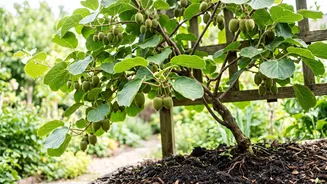
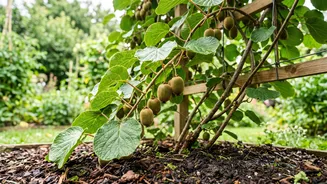
Your work with the soil doesn't end after planting. Applying a thick layer of organic mulch, such as wood chips, straw, or compost, around the base of the vine is crucial. This helps retain soil moisture, suppresses weed competition, and continues to add organic matter to the soil as it breaks down. Keep the mulch a few inches away from the main stem to prevent rot. Kiwi vines are heavy feeders, especially once they begin to fruit. Plan to apply a balanced fertiliser in the spring to support new growth. Regular, deep watering is essential during dry periods, but always allow the soil to dry slightly between waterings to avoid the dreaded 'wet feet' that can damage the roots.