






Find a Spot Away From City Lights
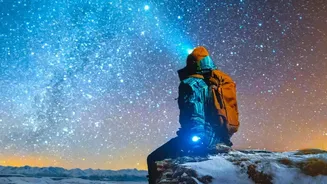
The single most important factor for good stargazing is a dark sky. In cities like Delhi or Mumbai, light pollution can wash out all but the brightest stars and planets. To truly see the night sky, you need to escape this artificial glow. This doesn't
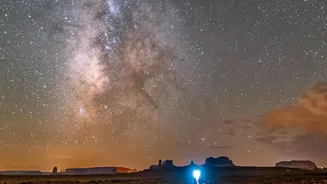
mean you need a trip to Hanle's Dark Sky Reserve in Ladakh, one of the best stargazing sites in the world. For a beginner, a short drive of an hour or two outside your city to a rural area, a quiet park, or a hilltop can make a massive difference. Locations like the outskirts of Jaisalmer, the Rann of Kutch, or hill stations like Coorg offer excellent viewing conditions. Use a light pollution map online to find a 'dark site' near you. Check the moon phase as well; a bright full moon can make it harder to see fainter stars, so the nights around a new moon are ideal.
Let Your Eyes Adapt to the Dark
Once you've found your dark spot, the next step is to do nothing at all. Your eyes need about 20 to 30 minutes to fully adapt to the darkness, a process called dark adaptation. During this time, your pupils dilate and your retinas become thousands of times more sensitive to light. This is a crucial step that many beginners miss. Avoid looking at your phone or any white light during this period, as even a brief flash can reset your night vision, forcing you to start the waiting process all over again. If you need to use a light, a red torch is best as it has the least impact on your night vision.
Know What You're Looking For
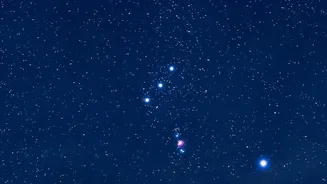
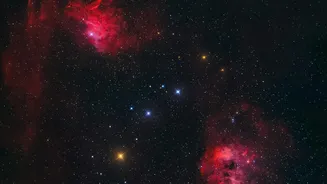
The night sky is not just a random scattering of lights. The easiest objects to spot are planets. They shine with a steady light and don't twinkle like stars do. Venus, often called the 'Evening Star' or 'Morning Star', is the brightest object after the Moon, while Jupiter is also very bright. Mars has a distinct reddish hue, and Saturn appears golden. Next, look for constellations. Start with easy ones visible from India, like Orion ('The Hunter') with its distinct three-star belt, especially prominent in winter. The Big Dipper, or Saptarishi, is visible in the northern sky during spring and can be used to find Polaris, the North Star. With a bit of luck and a very dark sky, you might even spot the Andromeda Galaxy, the most distant object visible to the naked eye, which appears as a faint, fuzzy smudge.
Use Your Smartphone as a Guide
Your phone, despite being a source of light pollution, can also be your most powerful tool. Stargazing apps use your phone's GPS and compass to show you exactly what you're looking at in real-time. Simply point your phone at a star or constellation, and the app will identify it for you. Popular and user-friendly apps available in India include Stellarium, SkyView, Star Walk 2, and Google's Sky Map. Many of these apps have a 'night mode' that turns the screen red to help preserve your dark-adapted vision. These apps can also show you where to find planets, satellites like the International Space Station, and notify you about upcoming celestial events like meteor showers.
Consider Binoculars as Your First 'Telescope'
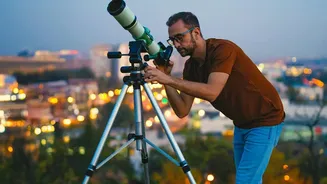
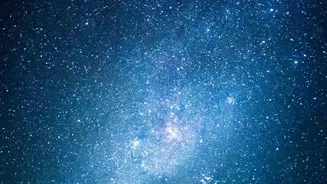
While this guide is about starting without a telescope, a good pair of binoculars is the perfect next step and a fantastic tool for any beginner. They are more affordable, portable, and easier to use than a telescope. A standard pair, like 10x50 binoculars, can reveal stunning details you can't see with the naked eye. You'll be able to see craters on the Moon, Jupiter's four largest moons (the Galilean moons), and the fuzzy shape of the Andromeda Galaxy will show more structure. Scanning the band of the Milky Way with binoculars on a dark night is a breathtaking experience, revealing dense clusters of countless stars.