





The Two Sides of a Label
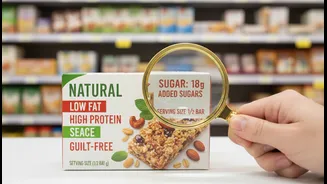
Walk down any supermarket aisle, and you’re met with a barrage of claims. '20g Protein!' screams one package. '100% Pure & Natural!' whispers another. Both are designed to make you feel good about your purchase, but they represent two fundamentally different
types of promises. One is about quantity—what is in the product. The other is about quality—what isn’t in the product, or how it was made. A protein claim is a quantitative statement that can be measured in a lab. A purity claim, however, is a qualitative statement about the absence of contaminants or the integrity of the process. Confusing the two can lead to poor choices, as a product high in protein is not automatically pure, and a pure product is not necessarily high in protein.
The Protein Promise: A Numbers Game
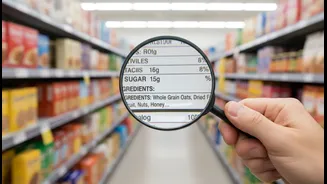
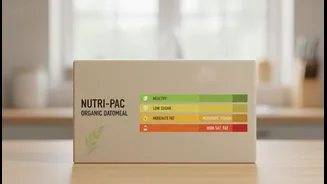
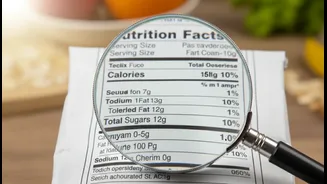
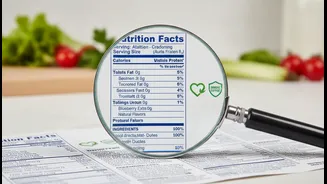
A claim about protein content is, at its heart, a numbers game. When a protein bar or a tub of whey powder says it contains 25 grams of protein per serving, that is a specific, measurable assertion. The standard method for verifying this for many years has been the Kjeldahl method, which measures the total nitrogen in a food sample. Since proteins are rich in nitrogen, this gives a reliable estimate of protein content. More advanced methods like chromatography can measure the amino acids directly for an even more precise figure, sometimes called "true protein". For consumers, the evidence is the 'Nutrition Facts' panel. This is where the manufacturer makes its official, regulated declaration. While misleading claims exist, as FSSAI has recently highlighted in India by cracking down on brands that overstate protein content, the claim itself is based on a verifiable quantity. Your job as a consumer is to read that number and decide if it meets your needs.
The Purity Pitch: A Matter of Trust
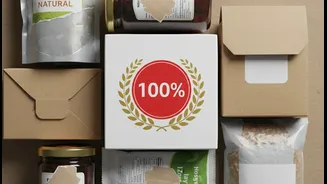
Purity claims are more abstract. Words like 'natural', 'clean', and 'pure' don't have a single, regulated definition and are often used as marketing buzzwords. A 'purity' claim isn’t about how much of a good thing is present, but rather the absence of bad things—like pesticides, heavy metals, microbes, or artificial additives. It can also refer to the integrity of the sourcing or processing, such as 'organic' or 'non-GMO'. The evidence for purity is not found in the nutrition facts, but in a different part of the label: the certification seal. This is where a third-party organization steps in to vouch for the product's claims. These independent bodies audit everything from farm to factory to ensure standards are met. Without that seal, a word like 'pure' is just an opinion.
Where to Find the Proof
So, how do you verify these different claims? For protein, you look at the numbers. Check the Nutrition Facts for 'Protein' in grams per serving. If you're skeptical about the brand, especially with supplements, look for evidence of third-party testing that confirms the label's accuracy. Recent actions by Indian regulators against misleading protein claims show that this scrutiny is necessary. For purity, you look for logos. A 'USDA Organic' or 'India Organic' seal means the product has met specific government standards for farming practices. Certifications from independent bodies like NSF or the Clean Label Project mean the product has been tested for contaminants like heavy metals and pesticides. The evidence is the paper trail of audits and lab reports that stand behind that seal. A brand claiming 'purity' without providing access to these test results is asking for blind trust.
Why This Distinction Is Critical
Understanding this difference protects you as a consumer. It prevents you from assuming that a high-protein shake is free from contaminants, or that a 'natural' snack has any meaningful nutritional value. A recent study in India found that nearly 70% of 36 popular protein supplements had incorrect protein information, and many contained toxins. This highlights that a protein claim and purity are separate issues. You might choose a protein powder for its high protein content to support your fitness goals. But you should also check for a third-party purity certification to ensure you're not also consuming unwanted heavy metals or pesticides. Conversely, you might buy an organic, cold-pressed juice for its 'purity'—meaning it's free from pesticides and artificial ingredients—while understanding that its protein content is negligible.