

More Than Just a Walk in the Park
Originating in Finland as a summer training method for cross-country skiers, Nordic walking has evolved into a popular global fitness activity. It is a specific technique and not to be confused with simply using trekking poles for hiking. The activity uses
specially designed poles to turn a simple walk into a full-body workout. By applying force to the poles with each stride, walkers engage their upper body muscles—including the chest, back, and arms—in a way that regular walking does not. This transforms a lower-body exercise into a comprehensive activity that engages up to 90% of the body's muscles.
The Full-Body Fitness Boost
The benefits of adopting the Nordic technique are significant. Compared to regular walking, it can increase calorie burning by a substantial margin, with some estimates ranging from 20% to over 46% more. This is because the heart has to work harder to supply blood to the additional muscles being used, improving cardiovascular health. Furthermore, the use of poles helps to distribute the body's weight and impact, reducing stress on joints like the knees and hips. This makes it an excellent low-impact option for people of all ages and fitness levels, including those with joint concerns or mobility restrictions. It also helps improve posture, balance, and core strength.
An Accessible Shift in Fitness
The growing popularity of Nordic walking lies in its accessibility and effectiveness. It's an activity that can be adapted for a gentle walk or a high-intensity workout, making it suitable for everyone from active retirees to young professionals. Recent trends show a diversifying audience, with a notable increase in participation among younger people who are drawn to its blend of gentle cardio and outdoor connection. This shift is also fueled by a desire for activities that are social, fun, and beneficial for both physical and mental wellbeing.
Mastering the Technique
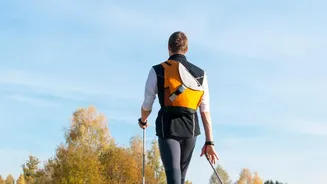
Proper technique is crucial to unlock the full benefits of Nordic walking. It begins with an upright posture, with relaxed shoulders and your gaze directed forward. The movement mimics natural walking: as your right foot moves forward, your left arm swings forward with the pole, and vice versa. The key is the pole plant. The pole should be planted between your front and back foot at an angle, pointing backward. As you move past the pole, you push off through the strap, extending your arm fully behind you. This push is what propels you forward and engages the upper body. A common mistake is planting the poles too far in front, which hinders propulsion and strains the joints.
Common Mistakes to Avoid
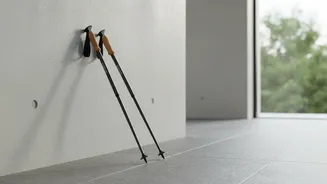
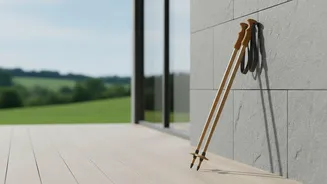
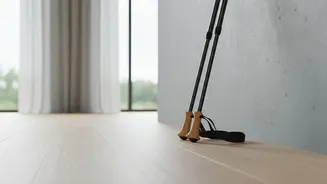
Beginners often make a few common errors that can reduce the effectiveness of the workout. One is using the wrong poles; Nordic poles are specifically designed with a unique strap system and are not the same as hiking or ski poles. Using poles that are too long or too short can also lead to poor posture and inefficient movement. Another frequent mistake is keeping a tight, clenched grip on the poles. The technique relies on a relaxed hand that pushes through the strap, opening as the arm extends backward. Finally, many newcomers use only their arms, bending at the elbow. The power should come from a longer, swinging motion from the shoulder, engaging the larger muscles of the back and chest.