





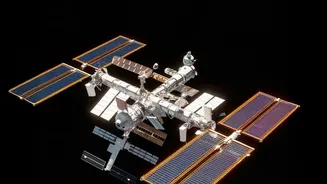
A Changing of the Guard in Orbit
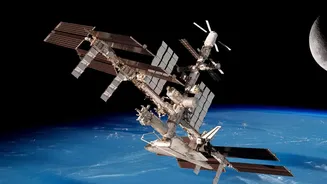
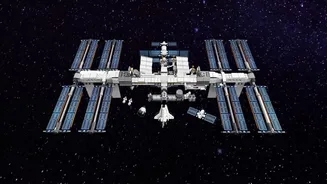
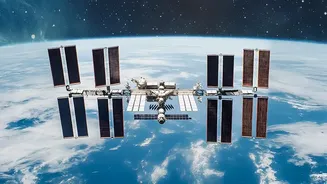
The International Space Station has been a beacon of global cooperation and scientific discovery for over two decades. However, its planned decommissioning in the early 2030s creates a critical challenge: ensuring humanity maintains a continuous presence
in low-Earth orbit (LEO). Rather than a single government-funded successor, the solution is taking the form of a bustling commercial marketplace. NASA is actively fostering this transition through its Commercial LEO Development Program, aiming to become just one of many customers for services provided by privately owned and operated space stations. This strategy frees up agency resources for deep-space missions while stimulating a robust LEO economy. This shift marks a pivotal moment, moving from a government-monopoly model to a dynamic ecosystem of private orbital platforms.
Meet the New Players in Space
Several key companies are at the forefront of developing these commercial orbital destinations. Axiom Space is a major player, initially building modules to be attached to the ISS before separating to form its own free-flying station, Axiom Station, as early as 2028. Another significant venture is the Orbital Reef, a collaboration between Blue Origin and Sierra Space, envisioned as a versatile 'mixed-use business park' in space. Sierra Space has been developing an innovative inflatable habitat called the Large Integrated Flexible Environment (LIFE). This module launches in a compressed state and inflates in orbit to create a large, multi-story living and working environment. Meanwhile, the company Vast is developing Haven-1, a smaller, single-module station intended for short-duration crewed missions, with a launch targeted for 2027.
What Makes These Modules 'Next-Gen'?
The innovation lies not just in who is building them, but how. Unlike the rigid, custom-built sections of the ISS, these new modules emphasize modularity and advanced technology. Sierra Space's LIFE habitat, for example, uses high-strength fabrics that are stronger than steel once inflated, allowing a massive internal volume to be launched on a single rocket. Axiom's modules are being constructed with modern manufacturing techniques, with the primary structures for its first module already being welded and machined. These habitats are designed from the ground up to be multipurpose, integrating advanced life support, crew quarters, and dedicated research facilities. They also plan for future needs, with Axiom developing orbital data centers to provide in-space cloud computing and data storage for its station and other orbital clients.
Powering Groundbreaking Research
The primary purpose of these new habitats is to create unparalleled platforms for research and development in microgravity. The persistent lack of gravity allows for breakthroughs impossible on Earth. For instance, in-space manufacturing could produce superior fiber optic cables and perfect crystals for semiconductors. Pharmaceutical companies are keen to study protein crystallisation to design more effective drugs, and 3D bioprinting of human organs is a long-term goal that becomes more feasible without the structural collapse caused by gravity. Axiom Space has even formed a University Alliance to help academic institutions identify research priorities and collaborate on scientific initiatives in orbit. These stations will serve as crucial laboratories for understanding human health in space, which is vital for long-duration missions to the Moon and Mars.
More Than Just a Laboratory
While science is a key driver, the business model for these stations is far broader. They are being designed to support a wide range of commercial activities, creating new markets in the LEO economy. This includes in-space manufacturing, where unique materials can be produced at a quality unattainable on Earth. It also extends to media and entertainment, with proposals for movie production in a truly out-of-this-world setting. And of course, there is space tourism, with companies designing crew quarters and hospitality experiences for private astronauts. By serving multiple industries—from government agencies and biotech firms to manufacturers and tourists—these commercial stations aim to create a sustainable and profitable business in orbit.