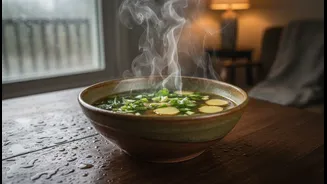









The Monsoon's Call for Comfort
There's a universal connection between a downpour and the desire for warm, comforting food. In India and across Asia, the rainy season prompts a collective turn towards the kitchen. On damp, gloomy days, our bodies instinctively seek warmth. Eating a hot
meal helps regulate our internal temperature, making us feel physically soothed and secure against the chill. Beyond the physical, the craving is deeply psychological. A lack of sunlight on overcast days can lead to a dip in serotonin, the brain's 'happy chemical', which can make us feel tired or low. Comfort foods, particularly warm and brothy ones, act as a quick, delicious fix, providing a sense of cosiness that feels like a hug from the inside.
A Symphony of Aromatic Ingredients
At the heart of this specific craving are two powerhouse ingredients: lemongrass and galangal. Often found together in Southeast Asian cuisine, they form a classic flavour base for iconic dishes like Thai Tom Yum soup. Lemongrass offers a bright, zesty, and subtly citrus flavour. Galangal, a rhizome from the ginger family, provides a contrasting sharp, peppery, and piney heat. It is spicier and more pungent than its more common cousin, ginger. When simmered together in a broth, they don't just add flavour; they create an intensely aromatic experience. This vibrant combination cuts through the richness of a soup, keeping it feeling light and fragrant while delivering a complex, layered taste that is both invigorating and soothing.
More Than Just Delicious Flavour
The satisfaction derived from these soups goes far beyond taste. The strong link between scent and emotional memory is key. When you inhale the steam rising from a bowl of lemongrass and galangal soup, you're taking in potent aromatic compounds. Lemongrass is rich in citral, a volatile oil that gives it a distinct lemon-like aroma. These compounds travel directly to the brain, activating regions associated with pleasure, memory, and emotion. This is why a particular smell can transport you back to a childhood memory or evoke a powerful feeling of well-being. In traditional medicine, both herbs are also valued for their wellness properties; lemongrass is used to aid digestion and reduce stress, while galangal is known for its anti-inflammatory and digestive benefits.
The Modern Plant-Based Shift
This traditional craving is finding new expression in the modern urban landscape. As more city dwellers embrace plant-forward lifestyles for health, ethical, and environmental reasons, demand for vegetarian and vegan options is growing across Asia. Plant-based versions of traditional Asian dishes, from curries to dumplings, are becoming increasingly popular. A soup built on a fragrant vegetable broth, infused with lemongrass and galangal, perfectly aligns with this trend. It offers a way to enjoy authentic, deeply satisfying flavours without relying on meat. Companies are developing innovative plant-based soup stocks that mimic traditional chicken or seafood flavours, making it easier than ever for busy urbanites to satisfy their cravings for complex, traditional tastes in a convenient, modern format.
A Bowl of Psychological Warmth
Ultimately, the power of a lemongrass and galangal soup on a rainy day lies in its ability to provide holistic comfort. It's a multi-sensory experience that combines physical warmth, satisfying flavour, and evocative aroma. This kind of food is deeply linked to nostalgia and a sense of security, reminding us of home and moments of care. The simple act of spooning a hot, fragrant broth feels grounding and restorative, especially when the weather outside is gloomy. It’s a ritual that nourishes more than just the body; it soothes the soul, creating a pocket of warmth and security that pushes back against the damp and grey of a rainy day. It's a perfect blend of culture, chemistry, and comfort in a single bowl.