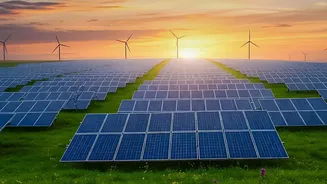





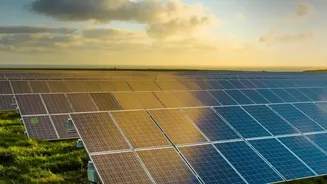
Imagine a farm where the sun provides two harvests: one of food from the soil, and another of electricity from above. This is the promise of agrivoltaics, an innovative solution gaining ground in India to solve a critical national dilemma.
What Exactly is Agrivoltaics?
Agrivoltaics,
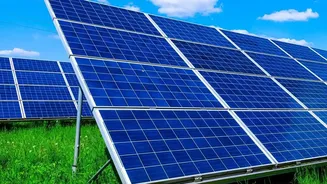
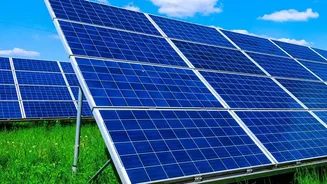
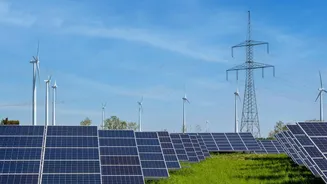
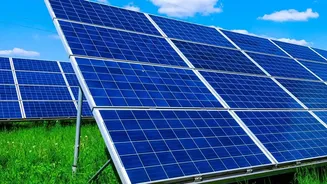
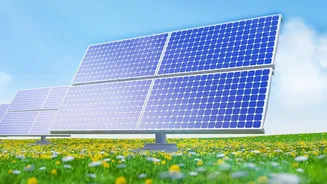
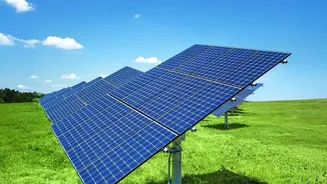
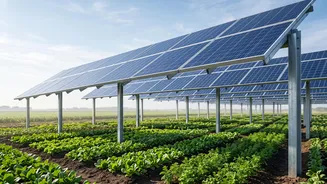
or agri-PV, is the practice of using the same piece of land for both agriculture and solar power generation. Instead of dedicating vast tracts of land exclusively to solar farms, this model installs solar panels on elevated structures, several feet above the ground. This design allows farming activities, including the movement of machinery and workers, to continue underneath. It’s a dual-use approach that addresses the growing competition for land between the need for renewable energy and the need to feed a growing population. With a significant portion of its land under cultivation, India sees agrivoltaics as a way to meet its ambitious renewable energy targets without compromising its agricultural base.
A Symbiotic Relationship
The relationship between the crops and the panels is mutually beneficial. The partial shade from the overhead panels can protect crops from excessive sun, heat stress, and hail, while also reducing water evaporation from the soil. This microclimate can actually boost the yields of certain crops that thrive in such conditions, like leafy greens, tomatoes, potatoes, and various spices like turmeric and ginger. In arid regions, this can be a significant advantage. In return, the vegetation below helps to cool the solar panels. The natural process of plant transpiration lowers the ambient temperature, which can increase the efficiency and electricity output of the panels. This symbiotic cycle makes the land more productive than if it were used for just farming or just solar generation alone.
The Government's Strategic Push
The Indian government is actively promoting this model, viewing it as a way for farmers to become 'Urjadata' (energy providers) as well as 'Annadata' (food providers). Schemes like the Pradhan Mantri Kisan Urja Suraksha evam Utthaan Mahabhiyan (PM-KUSUM) are central to this push. PM-KUSUM encourages farmers to install solar power plants on their land and sell surplus power to the grid, creating a stable, additional income stream. Recent policy discussions indicate a dedicated push for agrivoltaics, with plans for a new framework and a potential 10-GW component under a proposed PM-KUSUM 2.0 programme. This signals a strategic shift towards integrating energy and agriculture policy to boost rural economies and accelerate India's green energy transition.
Hurdles on the Path to Adoption
Despite its immense potential, widespread adoption of agrivoltaics faces significant challenges. The primary barrier is the high upfront cost. The elevated structures required to mount the panels high above the crops make these projects 25–40% more expensive than conventional ground–mounted solar farms. This is a major hurdle for India's small and marginal farmers, who make up the vast majority of the farming community and often have limited access to credit. There are also technical and operational issues to consider. Not all crops are suitable for growing in shade, so careful selection is crucial. Furthermore, challenges like cleaning panels mounted high off the ground and ensuring farm machinery can operate freely require specialised designs and can increase maintenance costs.