






The Official Freeze
The formal trade relationship between India and Pakistan has been fraught with political tension for years. Following the Pulwama attack in 2019, India withdrew the Most Favoured Nation (MFN) status from Pakistan and imposed a 200% customs duty on Pakistani
imports, effectively halting them. In response, Pakistan suspended bilateral trade with India. Tensions escalated further after a terrorist attack in Pahalgam in 2025, leading India to close the Wagah-Attari land border for trade and ban all direct and indirect transit of goods from Pakistan. Islamabad followed suit, officially suspending all trade with India, including through third countries. This created a near-total freeze on official commercial exchange, a policy reflecting the deep-seated political standoff between the two nuclear-armed neighbours.
Reality on the Ground
Despite the stringent bans, the flow of goods has not stopped. Recent data from the State Bank of Pakistan reveals a surprising surge. In the first quarter of the 2026-27 fiscal year, Pakistan's imports from India reportedly jumped by 69% to $61.74 million, compared to $36.55 million during the same period last year. This occurred while Pakistan recorded zero official exports to India, highlighting a one-way flow. This data doesn't signify a resumption of formal trade. Instead, it points to a resilient, informal supply chain that bypasses official sanctions and border closures, driven by persistent demand in Pakistan for Indian products.
The Dubai Detour
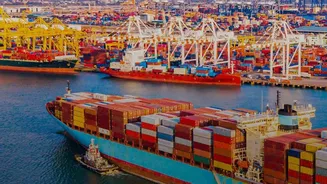
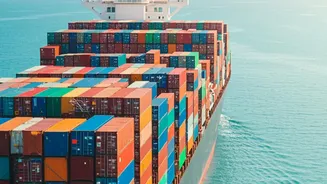
So, how do these goods cross the border? The primary workaround is the 'third-country' route, with Dubai in the UAE emerging as the most significant transit hub. Indian exporters send their goods to Dubai, where they are received by intermediary companies. The consignments are then stored in bonded warehouses, where they can be held without paying duties. Here, the magic of re-documentation happens: labels are changed, and paperwork is modified to list the UAE as the country of origin. From Dubai, the rebranded goods are then shipped to Pakistan, effectively masking their Indian roots and navigating the trade restrictions. This grey-zone strategy allows commerce to continue, albeit at a higher cost to the end consumer to cover the complex logistics.
The Economic Imperative
The persistence of this trade isn't just about consumer goods; it's rooted in critical economic dependencies. Pakistan's pharmaceutical industry, in particular, relies heavily on raw materials from India. Following the 2019 ban, Pakistan quickly faced shortages and rising prices of essential medicines, prompting its government to issue an exemption for therapeutic products and their raw materials on humanitarian grounds. This reliance is a matter of both cost and quality; sourcing the same materials from other countries could increase costs by 40-50%. Organic chemicals and pharmaceutical products consistently account for the vast majority of Pakistan's imports from India. Beyond medicine, other items like textiles, machinery parts, dyes, and agricultural products also find their way through these indirect channels.
An Unofficial Lifeline
The unofficial trade, estimated by some analysts to be worth billions of dollars annually, serves as a crucial economic lifeline. While precise volumes are hard to track, the system highlights a fundamental truth: political directives can't always erase deep-seated economic realities. For Pakistani industries, Indian supplies are often the most affordable and accessible. For Indian exporters, it's a way to retain access to a significant neighbouring market. The route through Dubai and other hubs like Singapore is a testament to the ingenuity of traders on both sides who have built robust, informal networks to keep supply chains moving when diplomatic channels are closed. This trade continues not in defiance of politics, but in parallel to it, driven by the simple, powerful forces of supply and demand.