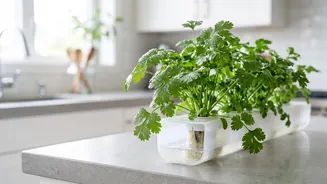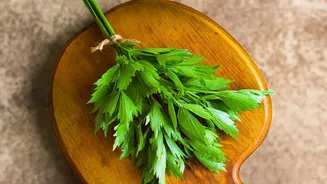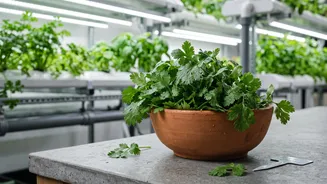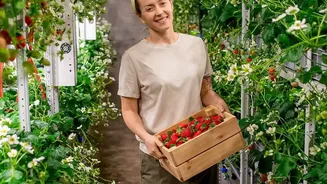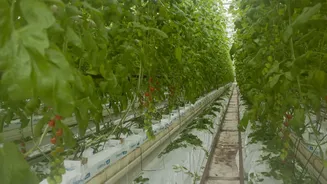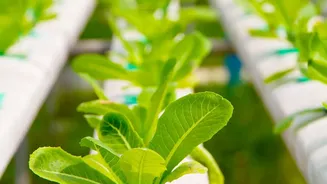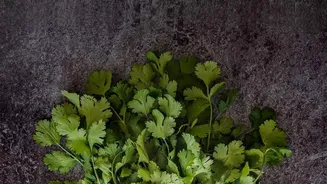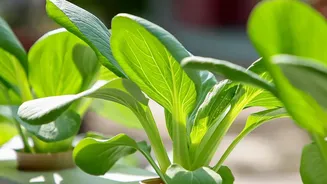




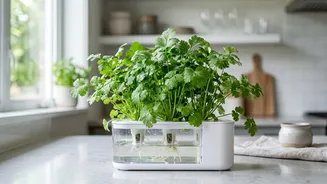
The joy of fresh dhaniya (coriander) is unmatched, but growing it in soil can be tricky. Hydroponics, a method of growing plants without soil, offers a modern, reliable way to get a constant supply of this essential herb right in your kitchen.
What is Hydroponics?
Hydroponics
is a soilless cultivation technique where plants are grown in a nutrient-rich water solution. Instead of roots searching through soil for food, they get everything they need directly from the water. This controlled environment leads to faster growth, higher yields, and fewer problems with pests and soil-borne diseases. It is an efficient method that can save up to 90% more water than traditional gardening, making it a sustainable choice for urban homes. For an herb like coriander, which can be sensitive and prone to failure in soil, hydroponics provides the stability it needs to thrive.
The Deep-Water Culture (DWC) System
Deep-Water Culture is one of the simplest and most beginner-friendly hydroponic methods. In a DWC system, the plant's roots are suspended directly in a reservoir containing an oxygenated nutrient solution. An air pump with an air stone continuously bubbles oxygen into the water, which is crucial for root health and nutrient absorption. This method is great for leafy greens and herbs like coriander. Its major advantage is its simplicity and low setup cost for a small-scale home garden. The large volume of water also provides a stable environment for the roots, protecting them from rapid temperature changes.
The Nutrient-Film Technique (NFT) System
The Nutrient-Film Technique involves growing plants in channels or gutters. A shallow, continuous stream—or 'film'—of nutrient solution flows over the bare roots of the plants, providing them with water, nutrients, and oxygen. The solution then circulates back to a main reservoir to be pumped through again. NFT is highly efficient in its use of water and nutrients, which is why it's popular in commercial settings for growing leafy greens. Coriander, with its relatively small root system and fast growth cycle, is well-suited for NFT systems. It allows for a high density of plants in a small space.
Which System is Best for Your Dhaniya?
Both DWC and NFT are effective for growing coriander, so the best choice depends on your space, budget, and goals. For beginners, a small DWC setup is often cheaper and easier to build and manage. Its large water reservoir is more forgiving if the air pump fails for a short period. NFT systems can be more compact and are excellent for creating a continuous, staggered supply of coriander, as you can add new plants at one end of a channel as you harvest from the other. However, NFT systems are more vulnerable to power outages; if the water pump stops, the thin film of moisture on the roots can dry out quickly. For most home growers looking for a steady personal supply, DWC often provides a more reliable and less demanding starting point.
Essential Tips for a Bountiful Harvest
Regardless of the system you choose, a few key factors will ensure success. Coriander seeds germinate best in cooler temperatures, around 18–21°C. Many growers recommend lightly cracking the hard outer shell of the seed to speed up germination. Once your seedlings are in the system, maintain the nutrient solution's pH between 5.5 and 6.5. The electrical conductivity (EC), which measures nutrient strength, should be kept in the range of 1.2 to 1.8 mS/cm. Coriander needs about 12–16 hours of light per day but dislikes intense heat, which can cause it to 'bolt' (flower prematurely). Keeping the air temperature between $15–$22°C will help prevent bolting and extend your harvest.