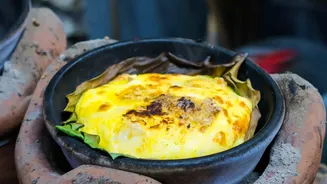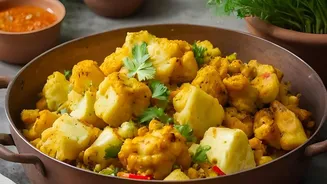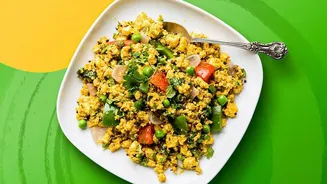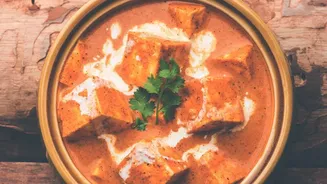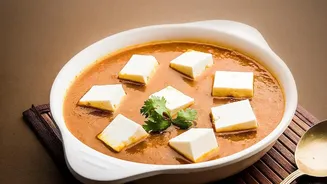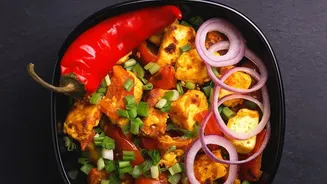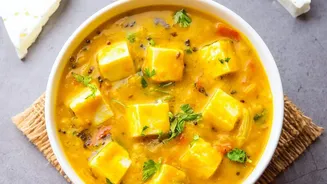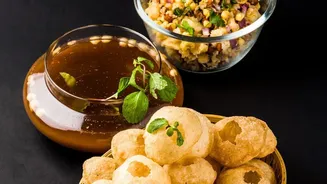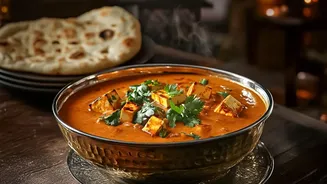


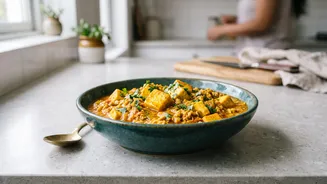
In the vibrant world of Indian street food, paneer is a constant. But what happens when this familiar favourite gets a chaotic, buttery makeover? Enter Paneer Ghotala, a messy, delicious scramble that’s more than just a curry.
What's in the Name 'Ghotala'?
To understand the dish, you
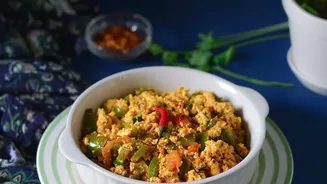
must first understand its name. In Hindi and Gujarati, 'ghotala' can mean 'scam' or, more fittingly, 'mess'. This perfectly describes the appearance of this famous street food from Surat, Gujarat. The ingredients are cooked and mashed together on a large flat pan, or tawa, into a glorious, flavour-packed scramble. Individual components merge into a unified, delicious whole, a delightful 'mess' that hides a wealth of flavour. There's a playful theory that the name fits because the paneer is so well incorporated into the gravy that you can't see it at first glance, like a tasty scam.
A Vegetarian Answer to a Street Food Classic
Paneer Ghotala didn't appear out of thin air. It is widely considered the vegetarian adaptation of another famous Surti street food: Anda Ghotala, or Egg Ghotala. The original dish involves boiled and fried eggs mashed into a spicy, rich gravy. Creative chefs cleverly adapted this concept, replacing the eggs with paneer to create a dish with a similar hearty quality and scrambled texture. This innovation made the beloved 'ghotala' accessible to a wider vegetarian audience, a hallmark of Indian street food culture where classic dishes are constantly being reimagined.
The Street-Style Difference
While you can make a version at home, the street-style experience is unique. It’s all about the large, hot tawa where vendors masterfully cook the dish. The base is a rich masala of finely chopped onions, tomatoes, ginger, and garlic, sizzled in a generous mix of oil and butter. Spices are key, and what often sets Paneer Ghotala apart from a simple paneer bhurji is the use of pav bhaji masala. This signature spice blend gives the dish its characteristic tangy, savoury profile synonymous with the bustling food stalls of Western India. The final flourish often includes a topping of grated processed cheese, cementing its status as an indulgent street food delicacy.
More Than Just Paneer Bhurji
At first glance, Paneer Ghotala might resemble Paneer Bhurji, but key differences in texture and ingredients set them apart. In bhurji, paneer is typically crumbled by hand. For ghotala, the paneer is almost always grated, which allows it to melt more seamlessly into the gravy. Some street vendors even use multiple textures of paneer—grated, crumbled, and fried cubes—to mimic the complexity of the original egg version. Ghotala often includes vegetables not always found in traditional bhurji, like capsicum, and sometimes even spinach or boiled potato to add thickness. The addition of processed cheese and pav bhaji masala also creates a richer, more complex flavour profile distinct from the simpler, homey bhurji.
How It's Served
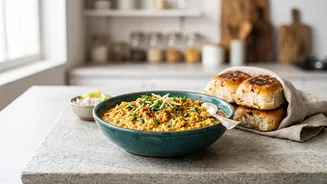
The classic and undisputed partner for Paneer Ghotala is pav. These soft, fluffy bread rolls are the perfect vehicle for scooping up the rich, buttery gravy. Street vendors will often toast the pav on the same tawa used to make the ghotala, slathering them in butter and sprinkling them with a bit of the same masala used in the dish. This creates a 'masala pav' that is crispy on the outside, soft on the inside, and infused with all the flavours of the main event. While it’s traditionally served with pav, its versatility allows it to be enjoyed with roti, paratha, or kulcha as well.