





The Problem with Prolonged Sitting
Our bodies are designed for movement, but modern work often demands stationarity. When you sit for hours, a cascade of negative effects begins. Your core muscles, which support the spine, can weaken from inactivity. This often causes you to slouch, leading
to a forward-head posture and rounded shoulders. This seemingly harmless slump puts immense strain on the muscles and ligaments in your neck and back. Over time, this constant pressure can lead to disc compression, reduced blood flow, muscle imbalances, and chronic pain, effectively locking your body into a state of poor posture.
The Power of the Micro-Break
Enter the micro-break: a short, intentional pause of 30 seconds to five minutes taken every half-hour or so to disengage from a static posture. This isn't about stopping work to scroll on your phone, which often keeps your neck in a compromised position. Instead, it's a strategic reset for your musculoskeletal system. Research shows that these frequent, short breaks are more effective at reducing fatigue and discomfort than longer, infrequent ones. By regularly interrupting the cycle of sitting, you restore blood flow, relax tense muscles, and prevent them from fatiguing into a slouched position. This small investment of time can reduce muscle fatigue by up to 50% over an eight-hour day.
Your 5-Minute Posture Reset
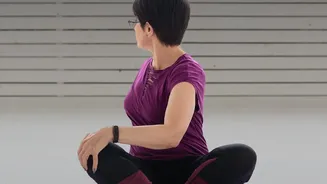
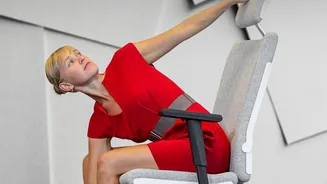
You don't need a gym or special equipment to fight the effects of sitting. These simple exercises can be done right at your desk.Chin Tucks: Sit or stand tall. Gently draw your head backward, as if creating a double chin, without tilting your head up or down. You should feel a stretch at the base of your skull. Hold for 5 seconds and repeat 5-10 times to combat 'tech neck'.Shoulder Blade Squeezes: While seated or standing, imagine you're trying to hold a pencil between your shoulder blades. Squeeze them together and down, opening up your chest. Hold for 5 seconds and release. Repeat 10 times to counteract rounded shoulders.Goal Post Pull-Downs: Extend your arms out to your sides at shoulder height, then bend your elbows to 90 degrees, like a football goalpost. Pull your shoulder blades down and together, feeling your upper back tighten. Release and repeat several times to activate key postural muscles.Seated Cat-Cow: Sit at the edge of your chair with your feet flat on the floor. On an inhale, arch your back and look up, pushing your chest forward. On an exhale, round your spine, tucking your chin to your chest. Alternate between these two poses for 30-60 seconds to improve spinal mobility.
Building a Consistent Habit
The key to long-term posture improvement is consistency. The best exercises are the ones you actually do. Try setting a recurring timer for every 30 minutes to remind yourself to stand up and move. You can also use habit stacking: link your micro-breaks to an existing routine, like doing a set of shoulder rolls every time you finish sending an email or hang up the phone. Consider placing your printer or water bottle across the room to force you to get up and walk. Even standing up for phone calls can make a difference. Small, frequent movements are far more beneficial than one big workout at the end of a sedentary day.