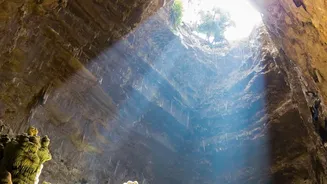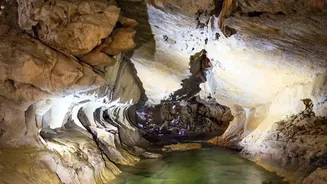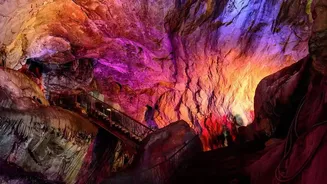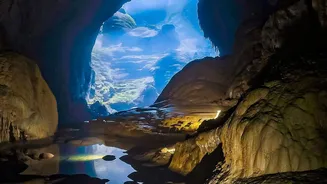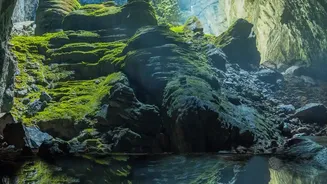





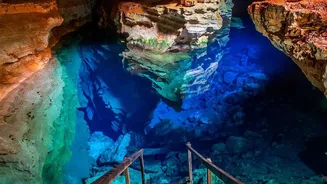
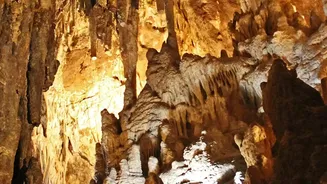
Forget everything you think you know about caves. In southwestern Slovenia, an extraordinary journey begins not with a descent on foot, but with a train ride deep into the heart of the earth, revealing a subterranean paradise.
All Aboard the Underworld Express
The experience at Postojna
Cave, one of Europe's most visited natural wonders, is unique from the very first moment. Visitors board an open-carriage electric train, the world's first and only double-track cave railway, for a thrilling 3.7-kilometre journey into the planet's belly. The railway, first established in 1872 with guides pushing the carts by hand, now whisks you through vast, dramatically lit halls and narrow tunnels where towering rock formations feel just an arm's length away. This initial ride isn't just transport; it's a breathtaking prologue to the splendours that lie deeper within, setting a cinematic tone for the adventure ahead. The train passes through caverns so large they have names, offering glimpses of what's to come before the walking tour even begins.
A Gallery of Natural Sculptures
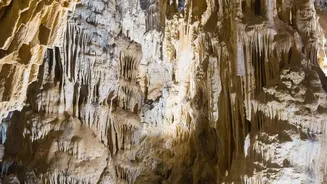
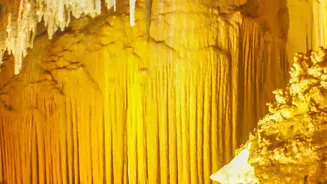
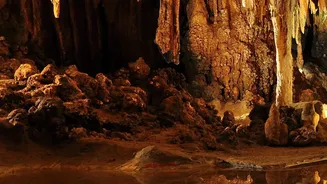
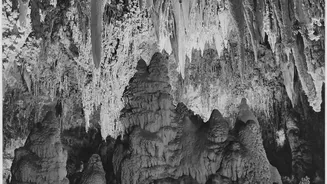
Once you disembark, you enter a world sculpted by water over millions of years. The Pivka River carved this 24-kilometre-long system, leaving behind a gallery of geological art. The walking portion of the tour covers roughly 1.5 kilometres on well-maintained paths, guiding visitors through a series of chambers, each with its own distinct character. You'll encounter the 'Spaghetti Hall', with its ceiling covered in countless thin, delicate stalactites, and the 'Red Hall' and 'White Hall', named for the mineral hues staining the formations. The sheer variety is astonishing, from translucent 'curtains' of rock that look like folded draperies to massive columns formed where stalactites and stalagmites have finally met after millennia of slow growth. The scale is immense, with formations like the 'Skyscraper', a 16-metre-tall stalagmite, rising from the cave floor.
The Brilliant and The Concert Hall
The crown jewel of Postojna is 'Brilliant', a stunning five-metre-tall stalagmite renowned for its dazzlingly white calcite coating that gives it a shimmering appearance. This iconic formation has become a symbol of the cave itself, a perfect sculpture created by the slow, steady drip of mineral-rich water over tens of thousands of years. The tour culminates in the Concert Hall, a cavern of immense proportions. This natural amphitheatre is so vast it can hold up to 10,000 people and boasts such exceptional acoustics that it has been used for symphony performances. Standing in this colossal space, surrounded by ancient rock and listening to the echo, provides a profound sense of the cave's grandeur.
Meet the Legendary 'Baby Dragons'
Postojna is not just a geological marvel; it is also a cradle of speleobiology, the study of cave life. Its most famous resident is the olm, or 'human fish' (Proteus anguinus), a blind amphibian endemic to the karst waters of the region. Ancient legends held that these pale, serpent-like creatures were the offspring of a dragon that lived deep within the cave. These remarkable animals can live for up to 100 years and survive without food for a decade. While they live deep in the cave's waterways, a specially designed vivarium allows visitors to observe these 'baby dragons' up close, offering a fascinating glimpse into life in perpetual darkness. The successful hatching of olms in the cave in 2016 was a global sensation, highlighting the site's importance for conservation.