



Who Is Mohsin Naqvi?
Mohsin Naqvi is a prominent figure in Pakistan, holding significant power in both politics and sports administration. As of 2026, he serves as Pakistan's Federal Minister of Interior and is also the Chairman of the Pakistan Cricket Board (PCB). Furthermore,
he holds the presidency of the Asian Cricket Council (ACC). This combination of a high-ranking government position with top roles in national and regional cricket governance is unusual and has drawn criticism. His multiple, powerful roles mean that his presence at any major sporting event is not just as a sports administrator but also as a representative of the Pakistani state, a fact that lies at the heart of the recent tensions.
The Trophy Snubs of 2025 and 2026
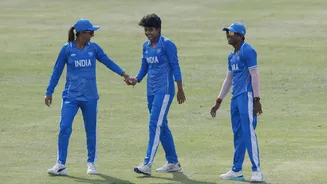
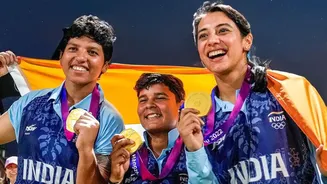
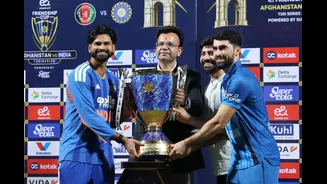
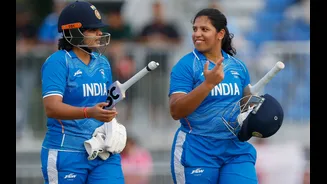
The current debate is rooted in recent events at the Asia Cup. After winning the Men's Asia Cup in 2025, the Indian team did not collect the trophy from Naqvi during the official presentation. This situation repeated itself at the ACC Women's T20 Asia Cup final in Dubai, where the victorious Indian women's team also did not accept the trophy from him. In both instances, Naqvi was on the podium in his capacity as ACC President, but the ceremonies were awkwardly stalled before proceeding without the Indian teams collecting the silverware from him directly. These incidents were widely interpreted as a silent protest, reflecting the strained political relationship between India and Pakistan.
Why Could Naqvi Present Medals at the Asian Games?
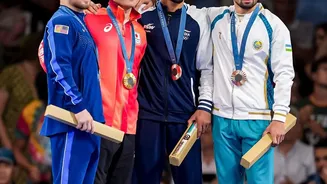
Unlike the Asia Cup, which is run by the ACC, the Asian Games operate under the Olympic Council of Asia (OCA). According to the OCA's constitution, the OCA President is responsible for presenting medals but can delegate this duty to other OCA members or representatives of the relevant Asian or international sports federations. While Naqvi's involvement is not automatic, he could theoretically be invited or designated to present medals, particularly for cricket, given his role as ACC President. However, reports suggest that his visit to Japan for the games is not even confirmed. The final decision rests entirely with the OCA, and neither the BCCI nor the Indian Olympic Association can preemptively block his nomination.
A Different Protocol, A Different Game
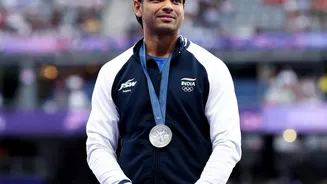
The Asian Games are a multi-sport event governed by rules that explicitly prohibit any form of political demonstration. Athletes are bound by the Olympic Charter's principles. This makes the situation different from a standalone cricket tournament. If the OCA designates Naqvi to present medals, the Indian athletes would be in a difficult position. A refusal to accept a medal on the podium could be viewed as a political act and might lead to penalties, including disqualification. The Board of Control for Cricket in India (BCCI) has remained non-committal, stating it will assess the situation if and when it arises, focusing first on the team's performance.
Sport and Politics: An Inseparable Rivalry
The India-Pakistan sporting rivalry, especially in cricket and hockey, is one of the most intense in the world, deeply intertwined with the nations' political history. Matches are frequently overshadowed by diplomatic tensions, security concerns, and off-field controversies. In just the past few months, the Pakistan Hockey Federation has requested a neutral venue for the upcoming Asian Champions Trophy in India, citing security concerns, a request that Hockey India has rejected. These recurring issues demonstrate that separating sport from politics is often impossible in this context. Every interaction, from a handshake to a trophy presentation, is scrutinised and carries symbolic weight.