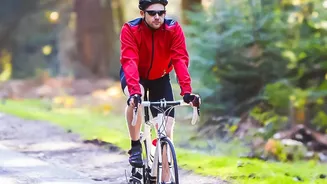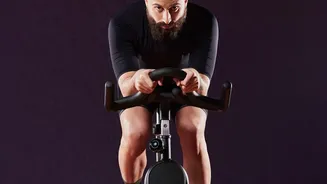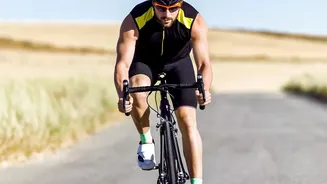



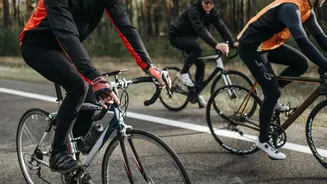
Looking for a powerful lower-body workout that's kind to your joints? Cycling and skating are two top contenders. Both promise strong, toned legs, but they build that strength in remarkably different ways by targeting muscles with unique motions.
The Powerhouse of the Pedal: Cycling's Muscular Focus
When
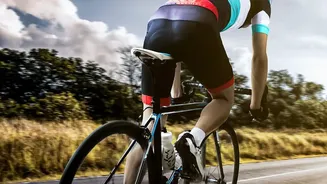
you hop on a bike, your quadriceps are the undisputed stars of the show. Located at the front of your thighs, these muscles do most of the heavy lifting during the downstroke, or the 'power phase', of each pedal revolution. This is what gives cyclists their renowned quad definition. The gluteus maximus, your largest glute muscle, partners with the quads to extend the hip and push the pedals down, especially when you increase resistance or tackle a steep hill. The hamstrings, at the back of the thigh, and the calf muscles play crucial supporting roles, helping to smooth out the pedal stroke and stabilize the ankle. While cycling certainly engages the glutes, its primary benefit is building muscular endurance rather than significant muscle mass, making it a quad-dominant activity.
Skating's Secret Weapon: Lateral Movement and Stability
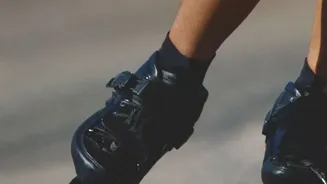
Inline or roller skating challenges your legs with a completely different motion. Instead of a repetitive forward-and-back circle, skating is built on a lateral, or sideways, push. This unique movement pattern brings different muscles to the forefront. While quads are still involved to maintain a bent-knee stance, skating heavily recruits the muscles on the outside of your hips—the hip abductors and the gluteus medius. These muscles are essential for pushing off to the side and for stabilizing your pelvis as you balance on one leg. This makes skating an excellent way to target hip and glute muscles that are often underutilized in other common exercises like running and cycling. Furthermore, the constant need to maintain balance provides a significant core workout, engaging your abdominals and lower back to keep you upright.
Strength vs. Coordination: A Different Kind of Challenge
The way these activities build muscle differs fundamentally. Cycling, with its fixed path of motion, is exceptional for building raw power and endurance through repetitive force. You can systematically increase the load by adding resistance or finding hills, which directly translates to stronger quads and greater cardiovascular fitness. Skating, on the other hand, is a masterclass in coordination and balance. It demands a higher level of agility as you navigate surfaces and constantly adjust to maintain stability. This recruits smaller stabilizing muscles throughout your legs, ankles, and core that cycling doesn't target as intensely. While cycling builds formidable strength in a few primary muscle groups, skating develops a more holistic sense of body awareness and control.
The Unsung Heroes: Core, Calves, and Hamstrings
While quads and glutes get the headlines, both sports engage other important muscles. In cycling, your core provides a stable platform for your legs to generate power efficiently, preventing lower back pain. In skating, the core's role is even more pronounced, as it works constantly to keep you from falling. Skating also provides a more balanced workout for the hamstrings compared to cycling, as they are actively used in the gliding and recovery phases of each stride. Both activities give the calf muscles a workout, but skating's demand for constant micro-adjustments at the ankle may provide a more comprehensive workout for the lower leg. The arm swing in skating can also provide a light upper body and shoulder workout.
Which Is Right for Your Goals?
Choosing between cycling and skating depends entirely on your fitness objectives. If your goal is to build powerful quadriceps and cardiovascular endurance for long distances, cycling is an unparalleled choice. Its controlled motion and potential for high resistance make it ideal for targeted strength gains in the front of the legs. If you're looking for a more well rounded lower body workout that strengthens your hips, improves balance, and heavily engages your glutes and core, skating is superior. Its low impact , gliding nature is also exceptionally gentle on the joints , making it a great alternative to running . For those seeking to burn calories , some studies suggest that the full body engagement of skating may give it a slight edge over cycling at a similar perceived effort .