




The Search in Natural Laboratories
The hunt for heat-resistant corals often begins in places that have already endured nature's fury. Scientists start by identifying 'bright spots'—reefs that have survived or quickly recovered from major marine heatwaves that caused widespread bleaching
in surrounding areas. These locations act as natural laboratories. Researchers use satellite data, oceanographic models, and local knowledge to pinpoint areas that might harbor resilient corals. Factors like regular exposure to fluctuating water temperatures or unique ocean currents can sometimes pre-condition corals to better withstand stress. For instance, some reefs are located in areas with natural upwellings of cooler water or are accustomed to daily temperature swings, which may give them a hardier constitution.
The Coral 'Stress Test'
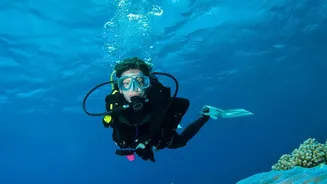
Once a promising site is identified, the real test begins. Divers carefully collect small, ethically sourced fragments from different coral colonies. These samples are then brought to field stations or advanced laboratories for what is essentially a coral 'stress test'. One common method is the Coral Bleaching Automated Stress System (CBASS), a portable kit that allows scientists to test coral resilience on-site. In these tests, coral fragments are placed in tanks where the water temperature is gradually increased, simulating a marine heatwave. Scientists meticulously monitor the corals, recording the precise temperature at which they begin to bleach—the process where they expel the vital algae living in their tissues. Corals that resist bleaching at higher temperatures for longer periods are flagged as potential 'super corals'.
Unlocking Genetic Secrets
Surviving a stress test is one thing, but understanding why a coral is resilient is the crucial next step. This is where genetics comes in. Scientists extract and sequence the DNA of both the coral animal and its symbiotic algae, known as zooxanthellae. By comparing the genetic makeup of heat-tolerant corals with more vulnerable ones, researchers can identify specific genetic markers linked to resilience. This trait isn't tied to a single gene but many, making the process complex. Some corals may have genes that help them better manage cellular stress, while others might host a 'super algae' partner that is itself more heat-tolerant. This genetic blueprint provides invaluable information, confirming that a coral's toughness is a heritable trait that could be passed to future generations.
Mapping a Future for Reefs
The data gathered from these discoveries is used for more than just scientific curiosity. The ultimate goal is to use this knowledge for proactive conservation. By mapping the locations of these resilient corals, conservationists can prioritize the protection of these specific reefs. Recent analyses have identified tens of thousands of square kilometers of such reefs, offering a more hopeful outlook than previously thought. The knowledge also informs restoration efforts. Scientists are experimenting with 'assisted evolution,' where they selectively breed the toughest corals in nurseries. The goal is to create a stock of resilient corals that can be used to repopulate and strengthen degraded reefs, accelerating a process of adaptation that would naturally take thousands of years.