




The Hero in Distress
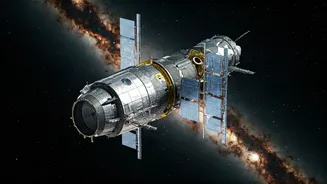
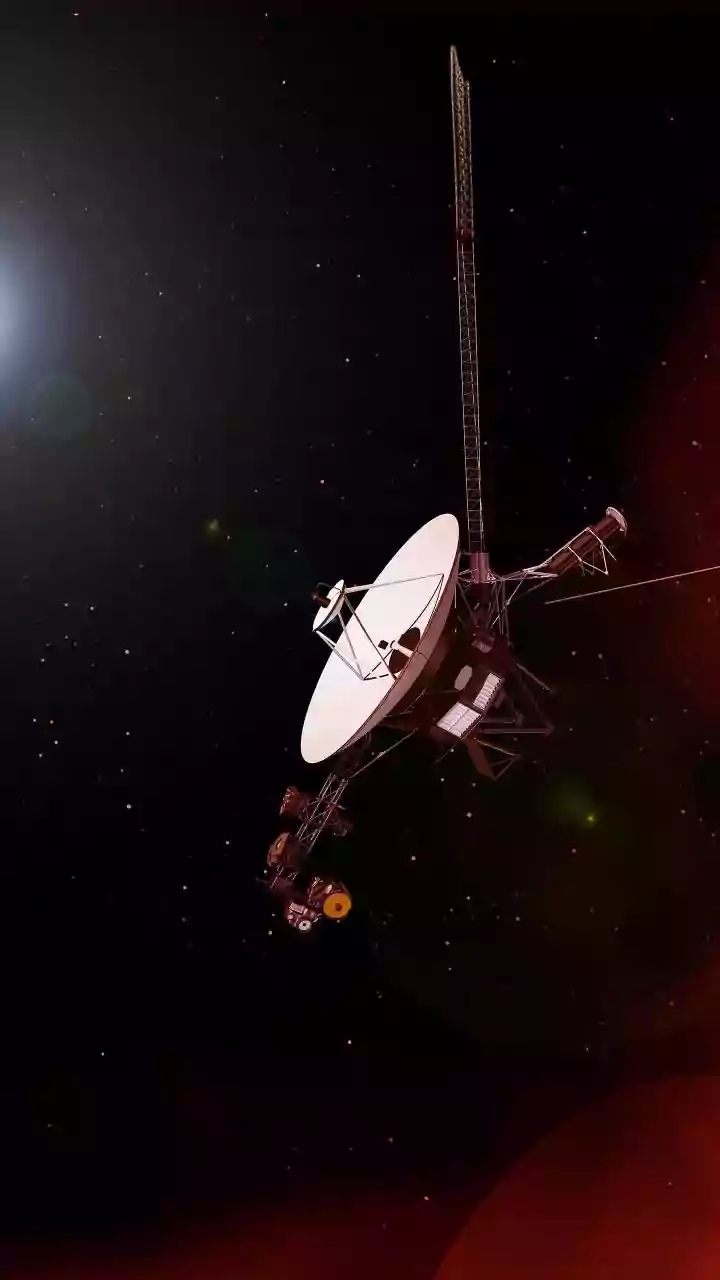
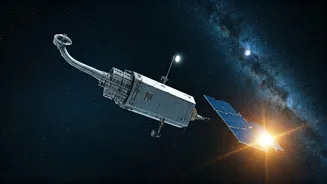
The asset in peril is NASA's Neil Gehrels Swift Observatory. Launched in 2004, Swift has been the agency's go-to cosmic first responder for over two decades. Its specialty is detecting gamma-ray bursts (GRBs), the most powerful explosions in the universe,
which can signal the birth of a black hole or the collision of neutron stars. True to its name, the observatory can pivot with incredible speed to catch these fleeting events and alert other telescopes to join the observation. This unique ability makes it a crucial tool for astronomers. Despite its age, it remains scientifically invaluable, contributing to our understanding of the most dynamic and violent events in the cosmos.
A Ticking Clock of Orbital Decay
For years, Swift orbited safely about 600 kilometers above Earth. But its orbit has been decaying, and recently, that process has accelerated dramatically. The culprit is surprisingly close to home: the Sun. Recent intense solar activity has heated and expanded Earth's upper atmosphere. This 'puffed up' atmosphere creates more drag on satellites in low-Earth orbit, acting like a brake. Swift has now sunk to an altitude of around 360 kilometers and is continuing to fall. Without intervention, NASA projected that the observatory would make a final, fiery re-entry into the atmosphere and be destroyed later this year.
Enter the Robotic Lifesaver
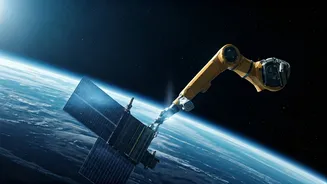
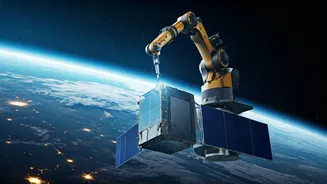
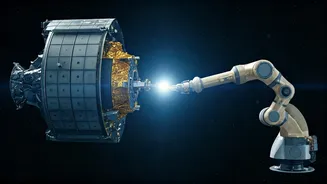
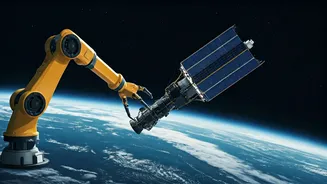
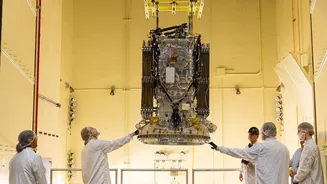
Replacing Swift would cost hundreds of millions of dollars and take years. Instead, NASA opted for a more audacious and innovative solution: a rescue. The agency awarded a $30 million contract to Katalyst Space, a private company, to build a robotic servicing spacecraft to save the telescope. The result is 'Link,' a refrigerator-sized robotic tugboat built on an unprecedentedly fast timeline. This mission is the first of its kind for the U.S.: a commercial robot attempting to capture and service a government satellite that was never designed to be grappled with in space. It’s a high-stakes test for a whole new potential industry of in-orbit servicing.
The Daring Plan
The mission plan reads like science fiction. A Northrop Grumman Pegasus XL rocket, launched from mid-air by a carrier jet, will deploy the Link spacecraft into an orbit near Swift. Over the next month, Link will use its gentle ion thrusters to carefully rendezvous with the falling observatory. Its three robotic arms will then perform a delicate dance, inspecting Swift for a secure grappling point. Once it has a firm hold, Link will begin the long process of giving Swift a lift. Over several months, it will slowly fire its thrusters to push the telescope back up to its original, safer altitude, potentially extending its operational life for many more years.
A High-Risk, High-Reward Launch
This high-risk, high-reward mission has already faced its share of drama. Initial launch attempts from the Marshall Islands on July 1 and July 2, 2026, were scrubbed—first due to weather, and then due to a software issue with the Pegasus launch vehicle that prompted an abort. NASA and its partners have corrected the issue and are targeting another attempt on July 3. The pressure is on. The mission is not just a race against Swift's orbital decay, but also a crucial proof-of-concept. A success would validate a cheaper, more sustainable way of managing space assets. A failure would mean the end for one of astronomy's most agile explorers.