








More Than Thread and Fabric
For the Nupe people, an ethnic group primarily from the Middle Belt of Nigeria, craftsmanship is a cornerstone of their identity. Among their celebrated arts like brasswork, pottery, and weaving, the intricate embroidery stands out. Traditionally adorning
the flowing 'Babariga' or 'Agbada' gowns, this decorative needlework is a visual spectacle and a form of storytelling. The city of Bida, in particular, is a historic hub for these crafts, where skills are passed down through generations. Nupe embroidery isn't merely for decoration; it’s a sophisticated visual language that communicates a person's lineage, social standing, and community values. The patterns are a blend of local style and Islamic influence, reflecting the region's rich history.
A Rich History Stitched in Time
The tradition of Nupe embroidery is deeply woven into the social and political fabric of the Nupe Kingdom. Historically, the most elaborate and prestigious garments were reserved for the noble and royal classes. The Etsu, or king, and his court would wear robes heavily decorated with complex patterns, a clear signifier of their power and wealth. These garments were, and still are, prominent during important ceremonies, festivals, and religious gatherings like Sallah celebrations. The craft itself is a testament to the Nupe people's interactions with other cultures, including trade with North African merchants and influences from neighboring empires. This history is captured in the threads, with certain designs evolving over centuries while retaining their core meanings.
The Language of Symbols
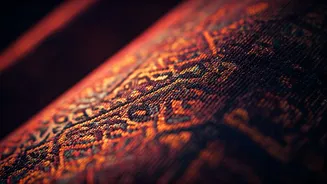
The true magic of Nupe embroidery lies in its symbolism. The bold, often geometric patterns are not random flourishes of creativity. Each motif is a symbol, a piece of a larger narrative. While the specific meanings can be complex and layered, they often relate to proverbs, historical events, or carry protective significance. Common motifs might include interlocking shapes that signify unity, knife-like patterns representing strength and power, or designs that mimic objects from the natural world. The choice of colours is also intentional, with vibrant hues like red, blue, and green making the garments stand out. These meticulously stitched symbols transform a piece of clothing into a wearable archive, a testament to a culture that values oral and visual storytelling.
The Hands Behind the Art
This remarkable art form is kept alive by dedicated artisans, for whom embroidery is not just a job but a heritage. The techniques are traditionally passed from parent to child, a painstaking process that requires immense patience and skill. The embroiderers, mostly men, can spend weeks or even months on a single, highly detailed garment. They work by hand, carefully applying threads to create the dense, textured patterns that are the hallmark of Nupe design. In a world of mass production, these artisans are the guardians of a tradition. However, they also face challenges, including the need to compete with machine-made textiles and the struggle to attract younger generations to the demanding craft.
Weaving the Past into the Future
Despite the challenges, Nupe embroidery is experiencing a modern renaissance. The craft's alignment with the growing demand for sustainable, handmade fashion has brought it new attention. Contemporary Nigerian designers are increasingly collaborating with Nupe artisans, incorporating the traditional motifs into modern silhouettes for a global audience. This has not only provided a vital economic lifeline for the artisans but has also introduced the beauty of Nupe culture to the world. Furthermore, the recognition of Bida as a UNESCO Creative City has highlighted the importance of preserving these unique skills. By adapting to new markets while holding fast to ancient techniques, Nupe embroidery continues to weave its story, ensuring its legacy for generations to come.