








The Limits of Calorie Counting
Since January 2022, the Food Safety and Standards Authority of India (FSSAI) has mandated that restaurant chains with a central license or ten or more outlets must display calorie information on their menus. The goal is to help consumers make informed
choices. However, studies on the effectiveness of calorie labelling show mixed results. While some diners purchase fewer calories when this information is present, many others experience 'information overload' or simply ignore the numbers. The context of a single number can be hard to grasp, especially when you're hungry and faced with an appealing menu. Is 800 calories a lot for a single meal? For many, it’s an abstract figure. This has led experts to argue that just providing data isn't enough; the data needs to be presented in a way that facilitates an easier, better choice.
The Unseen Influence of Portion Size
Psychological research consistently shows that the amount of food put in front of us is one of the most powerful influences on how much we eat. This is known as the 'portion size effect'. People have a natural tendency to finish what's on their plate, and over the past few decades, 'normal' portion sizes in restaurants have grown significantly. Studies demonstrate that when served a larger portion, people tend to eat more, often without realising it. Doubling a food portion can lead to an average consumption increase of 35%. This happens partly because our perception is skewed; a large plate makes a normal amount of food look small, an optical trick called the Delboeuf Illusion. So, even if a menu displays a calorie count, if it's tied to a supersized portion, the information does little to curb overconsumption.
Designing a Smarter Menu
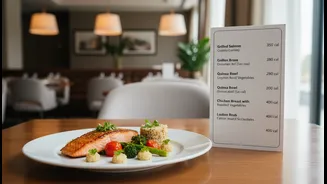
This is where smarter menu design comes in. Instead of just listing a single calorie count for a large, one-size-fits-all dish, forward-thinking restaurants can offer choices. Imagine a menu that lists a popular butter chicken not just as one dish, but with two options: a 'hearty' portion at 850 calories and a 'regular' portion at 600 calories. This simple change does two things. First, it reframes the decision. The choice is no longer between having the dish or skipping it, but between two manageable sizes. Second, it provides immediate, actionable context. The diner can clearly see the caloric 'cost' of the larger portion and make a decision based on their appetite and health goals. This approach moves beyond simple information and into active empowerment, helping consumers choose smaller portions without feeling deprived.
A Win-Win for Diners and Restaurants
This strategy isn't just good for consumers; it's good for business. Offering multiple portion sizes caters to a growing demographic of health-conscious Indians who want to enjoy dining out without compromising their wellness goals. It acknowledges that different people have different needs. A person looking for a light lunch has different requirements than someone wanting a celebratory feast. Providing these options can build customer loyalty and cast the establishment as a 'healthy place to eat'. Furthermore, it can help reduce food waste, a significant issue when customers are unable to finish oversized meals. Some research even suggests that the mere act of having to display calorie information can prompt restaurants to reformulate their recipes or introduce lower-calorie items, creating a healthier food environment overall.