





The New Era of Welcome Mats
International travel planning for Indians has a new, powerful variable: visa accessibility. In 2026, a significant trend has emerged where countries, particularly in Southeast Asia and Africa, are easing or eliminating visa requirements to attract one
of the world's fastest-growing tourism markets. This shift is a direct response to the increasing number of Indians travelling abroad, armed with a desire for new experiences and growing disposable incomes. For nations looking to boost their tourism economies, the Indian traveller is a high-priority demographic. As a result, policies that once involved cumbersome paperwork and long waiting times are being replaced by visa-free entry, visa-on-arrival facilities, and streamlined e-visa portals. This has empowered Indian tourists to make more spontaneous and cost-effective travel decisions, fundamentally changing how they choose their next international getaway.
Southeast Asia Opens Its Doors
Southeast Asia has become the epicentre of this change. Malaysia has extended its visa-free policy for Indian nationals through the end of 2026, allowing for a 30-day stay for tourism purposes. This move solidifies its position as a top choice for family vacations and shopping trips. Similarly, Sri Lanka now offers a free Electronic Travel Authorization (ETA) for Indian tourists, granting a 30-day stay at no visa cost, making its pristine beaches and rich heritage more accessible than ever. After a period of uncertainty in mid-2026, Thailand officially reinstated visa-free entry for Indian passport holders on July 14, 2026. While the permitted stay has been adjusted to 30 days, the policy removes the fee and hassle of a visa-on-arrival, a move celebrated by both leisure travellers and business event organisers. These waivers mean travellers can book trips with less lead time and save on visa processing fees.
Africa's Bold Invitation
The trend extends beyond Asia, with African nations also making bold moves. Kenya, a dream destination for wildlife and safari enthusiasts, declared itself a visa-free country for all global visitors, including Indians. Instead of a traditional visa, travellers are now required to obtain an Electronic Travel Authorization (eTA) online before their journey. This simplifies the entry process significantly, removing a key barrier for those looking to experience the Maasai Mara or the stunning landscapes of the Great Rift Valley. While there is still a processing fee for the eTA, the move is a clear signal of Kenya's intent to become a more accessible and attractive destination for the Indian market.
The E-Visa Advantage
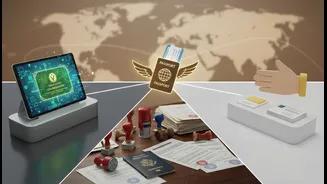
For destinations where visa-free travel isn't yet an option, the rise of the electronic visa, or e-visa, is the next best thing. An e-visa allows travellers to complete the entire application process online from the comfort of their home, eliminating the need for embassy visits and physical document submission. Countries like Vietnam, Turkey, Azerbaijan, and Georgia have become increasingly popular among Indians, partly due to their efficient e-visa systems. This digital process offers a predictable and convenient alternative to the often stressful and time-consuming traditional visa application, making these culturally rich destinations a viable option for many more travellers. The Indian government's Ministry of External Affairs maintains a regularly updated list of countries offering e-visa facilities to Indian nationals, which serves as a valuable resource for travel planning.
What About Europe and the West?
While visa-free access to the Schengen Area, the US, or the UK remains a distant prospect for most Indian tourists, there have been some positive developments. The Schengen states have introduced a "cascade regime," which makes it easier for frequent travellers with a good visa history to obtain multiple-entry visas valid for up to five years. This rewards established travellers with long-term access, reducing the need for repeated applications. Furthermore, the entire Schengen visa system is gradually transitioning towards a digital process, which aims to streamline applications in the future. For now, however, planning a European holiday still requires significant advance preparation, with securing a visa appointment often being the biggest hurdle.