

A Grand Parade of Planets
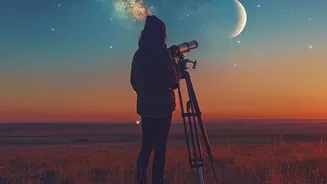
Throughout August, the pre-dawn sky hosts a remarkable gathering of planets. In the hours before sunrise, you can spot Mars and Saturn, which are both easily visible to the naked eye. For those with a clear eastern horizon and a bit of luck, the much
brighter Mercury and Jupiter may also be visible very low in the sky as twilight begins. While seeing all six planets that are technically aligned—including the faint Uranus and Neptune which require binoculars or a telescope—can be challenging, spotting the brighter ones is a rewarding experience. The best time to try is about 30 to 60 minutes before your local sunrise.
The Moon's First Quarter
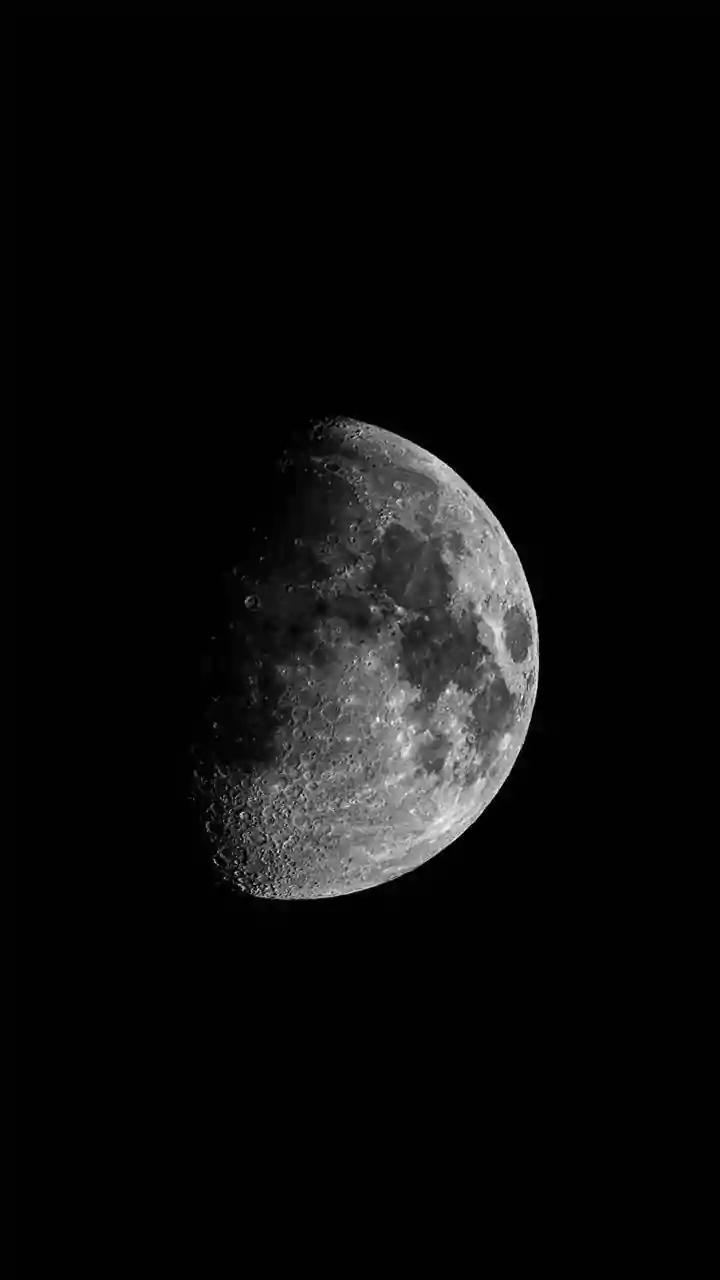
On August 20, the Moon reaches its First Quarter phase. This is an excellent time for new and experienced observers alike. At this stage, the Moon is 50% illuminated, and the line separating the lunar day and night, known as the terminator, reveals stunning details. Craters and mountains along this line are cast in long, dramatic shadows, making them stand out sharply. This sight is easily enjoyed with the naked eye, but a simple pair of binoculars or a small telescope will bring our celestial neighbour into breathtaking focus. It will be high in the sky after sunset, providing a convenient viewing window for most of India.
Saturn Builds Towards Opposition
The ringed planet, Saturn, is becoming a prime target for evening observation. Though its official opposition, when it will be at its closest and brightest for the year, is on October 4, it is already a spectacular sight throughout late August. The planet will be visible for most of the night, rising in the east in the mid-evening and tracking across the sky. Even a modest backyard telescope can reveal its famous rings, a sight that never fails to impress. During this period, Saturn shines brightly in the constellation Cetus. Its steady, yellowish light makes it easy to distinguish from the twinkling stars around it.
A Deep Partial Lunar Eclipse (For Some)
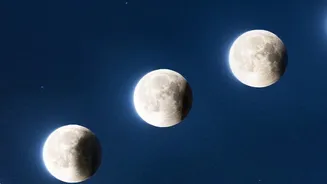
A significant celestial event occurs on August 28: a deep partial lunar eclipse where Earth's shadow will cover about 96% of the Moon's surface. At its peak, only a sliver of the Moon will remain brightly lit. However, this event will unfortunately not be visible from India, as the Moon will be below the horizon during the entire eclipse phase. The best views are reserved for observers in the Americas, Europe, and Africa. While we can't see it directly, you can expect space agencies like NASA to provide live streams, allowing everyone to witness the spectacle online.
The Moon Meets Saturn
The month concludes with a beautiful close approach between the waxing gibbous Moon and Saturn. Overnight from August 30 to 31, the two celestial bodies will appear near each other in the sky. They will rise together in the east about two hours after sunset and journey across the night sky. Such conjunctions are wonderful photo opportunities and make it incredibly easy for beginners to locate the planet Saturn. Simply find the bright Moon, and the nearby steady point of light will be the famous ringed world itself.