



From a Snapshot to a Movie
The breakthrough isn't a live video feed in the conventional sense. Instead, it represents a fundamental shift from static photography to dynamic cinematography. In 2019, the Event Horizon Telescope (EHT) collaboration gave humanity its first-ever image
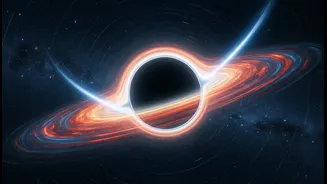
of a supermassive black hole, M87, followed by a picture of Sagittarius A at our own galaxy's core in 2022. These were monumental achievements, but they were single moments frozen in time. The process involved collecting petabytes of data from telescopes around the world, physically shipping hard drives, and spending months correlating the information to produce one frame. The new success, driven by the next-generation EHT (ngEHT) project, is about dramatically shortening that timeline. It enables scientists to generate multiple images over a single observation period, effectively creating a time-lapse movie that reveals how a black hole and its environment change over mere hours and days.
The Technology Behind the Triumph
This leap is powered by a technique called Very Long Baseline Interferometry (VLBI). By synchronizing a global network of radio telescopes, the EHT and ngEHT create a virtual telescope the size of Earth, capable of achieving the incredible resolution needed to see a black hole's shadow. The celebration is rooted in key upgrades to this network. More telescopes are being added in strategic locations, like Greenland and the French Alps, to sharpen the image and fill in gaps. The technology is also advancing to capture data at higher frequencies, which provides a clearer view through the plasma surrounding the black hole. Furthermore, the project is moving away from the slow process of shipping physical data drives. The goal is to develop faster data transfer protocols, potentially using satellite links, to get information from remote sites like the South Pole to processing centers in near real-time. This combination of a bigger array, better sensors, and faster data pipelines is what makes black hole cinema possible.
Unlocking the Universe's Most Violent Secrets
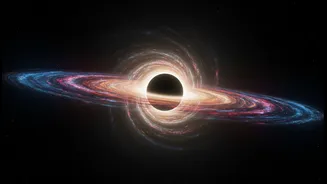
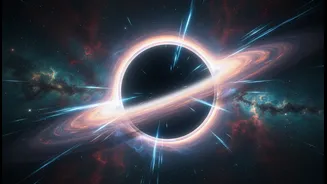
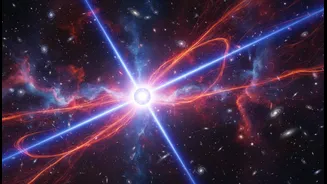
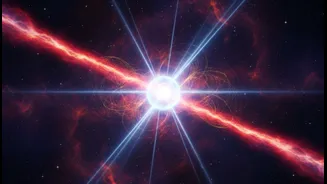
The reason for the celebration is what these 'movies' will allow us to see for the first time. Static images confirmed the existence of black hole shadows, but movies will reveal their behaviour. Scientists will be able to directly observe matter as it swirls into the black hole through its accretion disk, testing our understanding of physics in the most extreme gravitational environment in the universe. They can watch as powerful jets of particles, larger than entire galaxies, are launched from the black hole's poles, helping to solve the mystery of how these phenomena are powered. By tracking the motion of gas orbiting the event horizon, researchers can measure a black hole's spin—a critical parameter that influences the evolution of its host galaxy. This transforms black holes from being objects we simply know are there to dynamic, living engines that we can watch as they actively shape the cosmos.
A Global Collaboration with Far-Reaching Impact
This success is a testament to a massive international collaboration involving hundreds of scientists and dozens of institutions across more than 20 countries. It's a venture that pushes the boundaries not just of astrophysics, but of technology. The demand for processing immense datasets drives innovation in high-performance computing and data science. The need for synchronized, high-frequency observations pushes the development of ultra-precise atomic clocks and advanced sensor technology. This effort also opens new windows for so-called 'transient astronomy'—the detection of sudden cosmic events. An upgraded global telescope network could one day provide early warnings for events like a star being torn apart by a black hole, allowing other telescopes to quickly turn and watch the cataclysm unfold in real-time. The technologies being pioneered for black hole movies will have ripple effects across many fields that rely on big data and high-precision measurement.