




What Exactly is an Air Taxi?
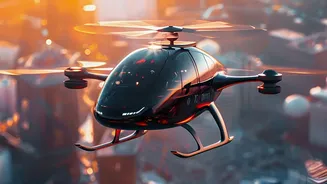
At the heart of the air taxi revolution is the eVTOL, which stands for electric Vertical Take-Off and Landing aircraft. Think of it as a sophisticated, multi-rotor drone large enough to carry people. Unlike helicopters, eVTOLs are powered by electricity,
making them significantly quieter, more sustainable, and, in theory, safer due to multiple propellers and motors. The specific model planned for India, Archer Aviation's 'Midnight' aircraft, is designed to carry four passengers and a pilot. These vehicles are built for short, rapid flights between designated landing pads called vertiports, with minimal charging time needed between trips.
The Promise: What the Technology Can Do
The primary promise of air taxis is to bypass soul-crushing urban traffic. A proposed route between Connaught Place in Delhi and Gurugram could take just seven minutes by air, compared to the 60 to 90 minutes it often takes by car. This efficiency is the main selling point. The aircraft are fully electric, contributing zero direct emissions, which aligns with goals for greener urban transport. They are also designed to be much quieter than conventional helicopters, allowing them to operate in dense urban environments with less disturbance. Beyond just ferrying passengers, the technology has potential applications in cargo delivery, logistics, and providing rapid medical and emergency services.
The Reality: What It Cannot Do Yet
While the vision is compelling, the technology has clear limitations today. The biggest constraint is battery technology. Current lithium-ion batteries limit most eVTOLs to a range of around 160 km. This is sufficient for short hops across a city but prevents longer regional travel. Passenger capacity is also small, typically just four to six people, which impacts scalability. Furthermore, the initial cost will be high. Early estimates for the Delhi-Gurugram route suggest a price of ₹2,000 to ₹3,000 per passenger, making it a premium service rather than a mass transit solution, at least initially. This price point is significantly higher than a comparable car ride, which might cost around ₹1,500.
The Biggest Hurdles: Regulation and Infrastructure
Technology is only half the battle. A massive challenge lies in building the necessary infrastructure and establishing a clear regulatory framework. Air taxis require a network of vertiports for landing, takeoff, and charging. These facilities have substantial energy needs; a single vertiport could require enough power for 800 homes. Finding space for them in crowded cities is another issue, with proposals focusing on rooftops of commercial buildings and hospitals. On the regulatory front, India's Directorate General of Civil Aviation (DGCA) has begun releasing guidelines for certifying eVTOL aircraft and vertiports. However, creating a comprehensive air traffic management system for thousands of low-flying vehicles is a complex task that is still in its early stages globally. Before any commercial flights can begin, the aircraft must be certified by aviation authorities, first in the US and then in India, a process that is still underway.