






What Is Actually Changing?
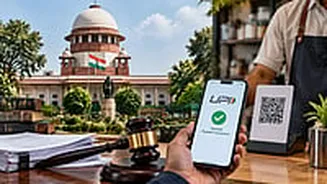
The National Payments Corporation of India (NPCI) has introduced a new charge called the Merchant Discount Rate (MDR) for certain UPI transactions. Effective October 15, 2026, a 0.4% MDR will apply to some person-to-merchant (P2M) payments above ₹2,000.
It's crucial to understand that this is not a blanket fee on all UPI use. It is a specific, behind-the-scenes charge within the payment ecosystem. For very large transactions of ₹75,000 or more, this fee is capped at a maximum of ₹300. This structure is designed to be much lower than typical credit card processing fees, which can range from 1.5% to 2.5%.
Will My UPI Payments Cost More?
For the average user, the simple answer is no. Your everyday transactions are unaffected. All person-to-person (P2P) payments, like sending money to family or friends, remain completely free, regardless of the amount. Furthermore, any merchant payment you make that is ₹2,000 or less is also exempt from this new MDR. The government and NPCI have been clear that merchants are not supposed to pass this charge on to customers. So, when you scan a QR code at a shop, you should not be asked to pay an extra fee for using UPI. The charge is absorbed by the merchant and their payment service provider.
So, Who Is Actually Affected?
The new MDR primarily affects certain merchants receiving UPI payments over ₹2,000. However, even here, there are significant exemptions. Many small merchants, such as those receiving up to ₹1 lakh per month via UPI, will continue to enjoy zero MDR. Estimates suggest that around 96% of all merchant transactions will not be impacted by this change because they are either below the ₹2,000 threshold or fall under an exemption for small businesses. The fee is mainly targeted at larger, established businesses that process a high volume of digital payments. For certain essential categories like fuel, telecom, utilities, and railways, a lower, flat fee applies for transactions over ₹2,000.
Why Was This Change Necessary?
While UPI has been a revolutionary, zero-cost service for years, the system's rapid growth has put financial pressure on the banks and payment companies that maintain the infrastructure. Government subsidies, while helpful initially, were not a permanent solution for the massive transaction volumes. This new MDR is designed to create a sustainable revenue model for the payment ecosystem. It provides an incentive for payment processors to continue investing in the technology, security, and expansion of the UPI network. By charging a nominal fee on a small fraction of high-value merchant transactions, the system can fund its own upkeep and ensure it remains robust and reliable for everyone.
The Bigger Picture for Digital India
This move should not be seen as a step back for digital payments, but rather a step towards maturity. It signals a shift from a subsidy-driven model to a self-sustaining one. A financially healthy payments ecosystem encourages innovation and ensures that the platforms we rely on can invest in better security and new features. By targeting only a small segment of high-value commercial transactions, the framework ensures that UPI remains an accessible and affordable tool for hundreds of millions of Indians and small businesses. An estimated 5% of the MDR collected will even be used to create a fund to help accelerate UPI adoption among smaller merchants in rural and remote areas.