





Trust Your Senses First
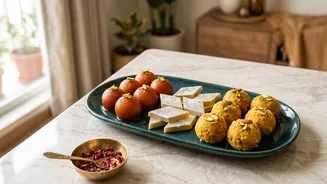
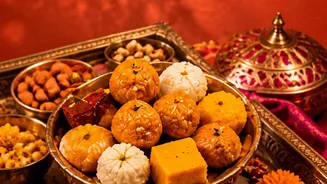
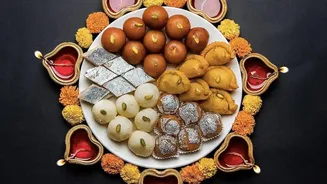
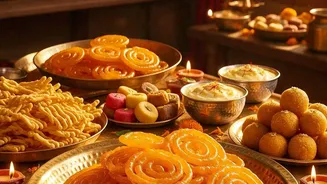
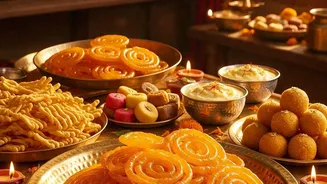
Before you even get to complex tests, a simple sensory check can reveal a lot. Fresh sweets should have a pleasant, natural aroma. If a mithai smells sour, stale, or has a chemical-like odour, it's a major red flag. Visually, avoid sweets with unnaturally
bright colours, as these may contain non-permitted industrial dyes which can be harmful. The texture is another clue; fresh mithai should not be unusually hard, dry, or excessively sticky. If a sweet feels tough or rubbery, it has likely lost its freshness.
The Khoya and Mawa Purity Check
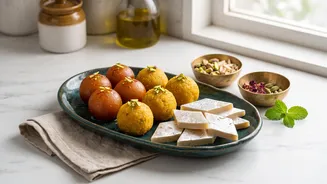
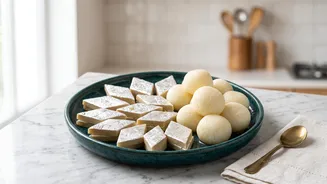
Khoya, or mawa, is the base for many traditional sweets and a primary target for adulteration. Dishonest vendors often mix it with starch to increase its volume and cut costs. You can test this at home. Take a small sample of the sweet or khoya, dissolve it in a little hot water, and let it cool. Then, add a few drops of an iodine solution. If the mixture turns blue or black, it confirms the presence of starch. Another simple method is to rub a small amount of khoya on your palm. Pure khoya will feel slightly grainy and leave a greasy residue, smelling faintly of ghee. Fake mawa often feels pasty, sticky, or unnaturally smooth.
Is Your Silver 'Vark' Actually Aluminium?
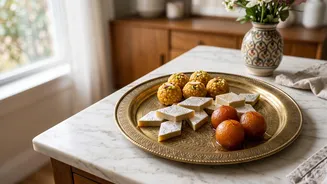
The delicate silver leaf, or vark, that adorns treats like Kaju Katli is often replaced with cheaper and dangerous aluminium foil. There's a straightforward way to tell the difference. Gently rub the silver-coloured layer with your finger. Real silver vark is incredibly fine and will dissolve or break apart into your skin. Fake aluminium foil, on the other hand, will not dissolve. Instead, it will detach from the sweet and may roll into a tiny, solid ball. Genuine silver has a soft sheen, whereas aluminium foil looks excessively shiny.
Testing for Milk and Ghee Adulteration
Milk is another ingredient frequently adulterated, sometimes with substances like detergent or urea to mimic thickness and protein content. These adulterants can carry over into the sweets. While lab tests are definitive, a simple check for detergent in milk-based sweets can be done by dissolving a small piece in water and shaking it vigorously. If an unnatural, thick lather forms, it could indicate the presence of detergent. For ghee-based sweets like laddoos, one clue is the smell and texture. Ghee adulterated with vanaspati (hydrogenated vegetable oil) will often leave a waxy feeling on the tongue and lack the rich aroma of pure ghee. A quick test is to rub a bit of the sweet on your palm; pure ghee will start to melt from your body heat, while vanaspati will not.
Smart Buying Habits for a Safer Diwali
Beyond home tests, your purchasing habits can be your first line of defence. Always buy from licensed and reputable sweet shops that maintain high standards of hygiene. Be wary of unusually low prices or extravagant 'buy one, get one free' offers on milk-based sweets, as this can be a sign of cost-cutting with substandard ingredients. The Food Safety and Standards Authority of India (FSSAI) has mandated that sweet shops display the 'date of manufacture' and 'best before' date on packaged and loose sweets. Always check these dates before buying. If possible, choose sweets that use natural colouring from ingredients like saffron, turmeric, or beetroot and avoid those with vibrant, synthetic hues.