





A Trade Relationship on Ice
Since 2019, formal trade relations between India and Pakistan have been largely suspended. Following the Pulwama attack, India revoked Pakistan's Most Favoured Nation (MFN) status and imposed a 200% customs duty on Pakistani imports, effectively halting
them. In response, Pakistan suspended bilateral trade with India. This diplomatic standoff closed official channels, including the crucial Wagah-Attari land border for most commerce, seemingly bringing a centuries-old trading relationship to an end. Yet, economic demand does not always follow political decrees. The demand for specific Indian goods in Pakistan remains robust, creating a powerful incentive for businesses to find a way around the barriers.
The Dubai Detour: A Global Workaround
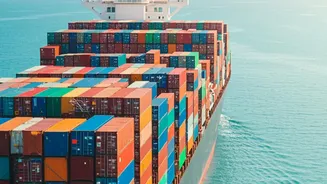
The primary alternative route for Indian products is a journey through third countries, with Dubai in the United Arab Emirates serving as the most significant hub. The process is straightforward: Indian exporters ship their goods to a free-trade zone in Dubai. There, in bonded warehouses where goods can be stored duty-free, the consignments are received by intermediary companies. These entities then change the product's documentation, relabeling it to obscure its Indian origin. For example, a shipment of Indian-made textiles or machinery parts might be re-labelled as 'Made in UAE'. From Dubai, these goods are then legally re-exported to Pakistan, appearing as imports from the UAE, not India. Other transit hubs like Singapore and Colombo are also used in a similar fashion.
What's Making the Journey?
A wide array of Indian products is in demand across the border. Pharmaceuticals and their raw materials are among the most critical items, with Pakistan's healthcare sector having a long-standing reliance on Indian supplies. In fact, Islamabad has made some exceptions for therapeutic goods. Beyond medicine, the list includes organic chemicals, auto parts, machinery, spices, tea, coffee, and even vegetables like tomatoes and onions. Before the 2019 ban, cotton was also a major export to feed Pakistan's large textile industry. The continued demand highlights a simple economic reality: for many of these goods, Indian products offer a combination of quality, price, and proximity that alternatives from other countries cannot easily match.
The Cost of an Informal System
This roundabout trade, while effective, comes at a cost. The extra legs of the journey—shipping to Dubai, storage, and relabeling—add significant expense. Middlemen in transit hubs take a cut, and the final price for Pakistani consumers and industries is inevitably higher than it would be through direct trade. While a precise figure is difficult to ascertain, the economic think tank Global Trade Research Initiative (GTRI) has estimated that Indian goods worth over $10 billion may be reaching Pakistan annually through these indirect routes. This 'grey market' trade also means a loss of customs revenue for governments, as the trade is not officially recorded between the two nations. It creates a scenario where Pakistani consumers pay a premium, Indian exporters may lose out on higher margins, and intermediaries in third countries profit.
A Resilient, Unofficial Economy
Recent data from the State Bank of Pakistan indicates a significant surge in imports from India, despite the bans. In the first quarter of the 2026-27 fiscal year, imports rose by 69% compared to the same period the previous year, with figures hitting $61.74 million. This striking increase, with no corresponding exports from Pakistan to India, strongly points to the scale of third-country trade. This thriving informal economy demonstrates that deep-seated supply chain dependencies and consumer preferences are powerful forces. While political directives can freeze official ties, they struggle to erase decades of economic integration entirely. The flow of goods, though rerouted and more expensive, continues to carve its own path dictated by the persistent laws of supply and demand.