



The Great Monsoon Myth: Cloudy Skies and UV Rays
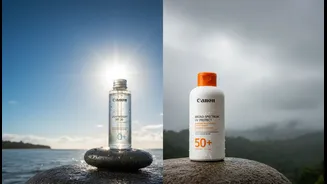
It’s a common belief: if you can’t see the sun, you don’t need sun protection. However, this is a dangerous misconception. The sun emits different types of ultraviolet (UV) rays, primarily UVA and UVB. While thick, heavy cloud cover can significantly
reduce UVB rays, which are responsible for immediate sunburn, they are less effective against UVA rays. UVA rays have a longer wavelength that allows them to penetrate clouds, glass, and deeper into your skin, contributing to premature ageing, wrinkles, and pigmentation. Shockingly, up to 80% of UV rays can still reach your skin on a lightly overcast day. Data shows that India's UV index remains in the moderate-to-high range even during the monsoon months of July and August, meaning protection is not optional.
Rethinking Your Skincare for High Humidity
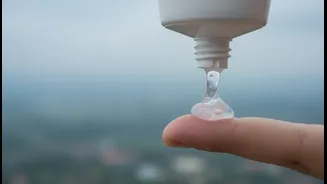
Monsoon weather isn't just about clouds; the high humidity presents its own set of challenges. Heavy, creamy products can feel sticky, clog pores, and lead to breakouts when mixed with sweat. This is the season to switch to lighter formulations. Look for sunscreens that are described as gel-based, aqua-gel, or having a matte finish. These formulas are designed to absorb quickly without leaving a greasy residue, making them far more comfortable for daily wear in humid conditions. Key ingredients to look for include hyaluronic acid for lightweight hydration and niacinamide to help control oil and improve skin texture. A water-resistant label is also crucial, as it ensures your protection holds up better against sweat and unexpected drizzles.
A Commuter’s Guide to Staying Protected
Commuting during the monsoon adds another layer of complexity to sun protection. You might be navigating crowded public transport, walking in the rain, or sitting in a car by a window. Remember that UVA rays penetrate glass, so you are still exposed during your drive or bus ride. The biggest challenge is reapplication. Sunscreen's effectiveness diminishes over a few hours, and even faster with sweat or rain. For commuters, reapplication every 2-3 hours of sun exposure is recommended. If you've been sweating, blot your face with a tissue before reapplying to ensure the product adheres properly. For those who wear makeup or have oily skin, powder sunscreens or sunsticks can be lifesavers for quick, mess-free touch-ups on the go.
How to Reapply Sunscreen Effectively
The thought of reapplying lotion over your midday face can be daunting, but it doesn't have to be a mess. The key is technique. Instead of rubbing, which can disrupt makeup and feel greasy, use a patting motion. You can use your fingertips, a clean cushion puff, or a damp makeup sponge. Dot the sunscreen on your face and gently press or bounce it into the skin until it's absorbed. Sunscreen sprays are another convenient option, but they must be used correctly. Don't just mist and go. For adequate protection, spray generously until your skin has a visible sheen and then rub it in to ensure even coverage. Keeping a small, travel-sized tube of your favourite lightweight sunscreen in your bag is the easiest way to make reapplication a consistent habit.
Beyond the Bottle: Additional Protective Measures
Sunscreen is your most important tool, but it's not your only one. Creating a physical barrier between your skin and the sun provides an extra layer of defence. This is especially important during peak UV hours, typically between 10 a.m. and 4 p.m., even on cloudy days. A wide-brimmed hat can protect your scalp, face, and neck. An umbrella, a common monsoon accessory, does double duty by shielding you from both rain and UV rays. Tightly woven fabrics and darker colours also offer better sun protection than lightweight, light-coloured clothing. Don't forget your eyes; a good pair of UV-blocking sunglasses is essential for protecting the delicate skin around them and preventing long-term eye damage. Pairing these physical barriers with a good sunscreen routine gives you the most comprehensive protection possible.