

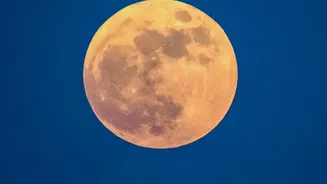
Understanding a Lunar Eclipse
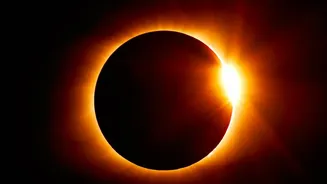
A lunar eclipse happens when the Earth positions itself directly between the Sun and the Moon, casting its shadow onto the lunar surface. Unlike a solar eclipse, which requires special eye protection, a lunar eclipse is perfectly safe to view with the naked
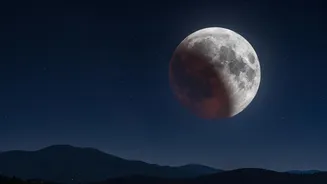
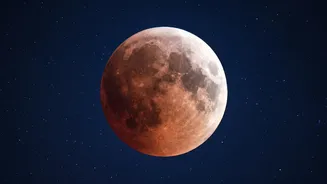
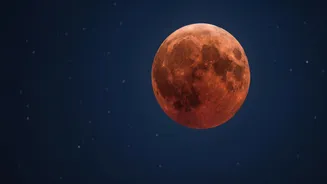
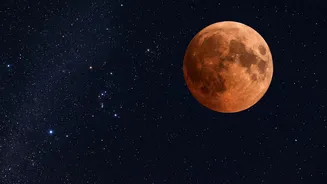
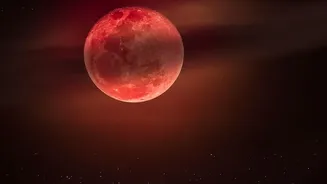
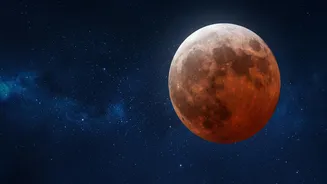
eye. There are three types: total, partial, and penumbral. In a total eclipse, the entire Moon is engulfed in Earth’s darkest shadow (the umbra), often taking on a reddish hue known as a “Blood Moon”. A partial eclipse occurs when only a part of the Moon enters the umbra, looking as if a bite has been taken out of it. A penumbral eclipse is more subtle, with the Moon passing through Earth’s fainter outer shadow.
Mark Your Calendars: The Next Visible Eclipse
The next significant lunar eclipse visible from India will be a total lunar eclipse on the evening of March 3, 2026. According to the India Meteorological Department, this eclipse will be visible from most of the country, though viewers in the extreme west may miss the initial phases. The ending of the eclipse will be widely visible at moonrise. For those in the eastern parts of India, such as the North-East states and the Andaman and Nicobar Islands, the end of the total phase might also be visible as the Moon rises. The general timings see the eclipse ending around 18:48 IST, providing a fantastic evening spectacle for families and enthusiasts alike. The next visible lunar eclipse after that will be a partial one on July 6, 2028, followed by a total lunar eclipse on December 31, 2028.
Find Your Perfect Viewing Spot
To get the best view, your primary goal is to escape light pollution. The darker your surroundings, the more brilliant the eclipsed Moon and surrounding stars will appear. A terrace, a nearby park, or even a balcony facing away from bright streetlights can work well in a city. For a truly breathtaking experience, consider travelling to a designated dark-sky location. India has several renowned spots for stargazing. Hanle in Ladakh is home to India's first Dark Sky Reserve and is considered one of the best places in the world for astronomy. Other excellent locations include Spiti Valley in Himachal Pradesh, the Rann of Kutch in Gujarat, and various national parks like Pench and Kanha in Madhya Pradesh.
Gear Up: What You Need (and Don't)
The best part about a lunar eclipse is that you don't need any special equipment to enjoy it. Your eyes are enough. However, to enhance the experience, a simple pair of binoculars can work wonders. They will reveal more detail on the lunar surface and make the colour changes more apparent. If you have a telescope, you can get a stunning, close-up view of the craters and seas as Earth's shadow slowly creeps across them. But don't feel pressured to buy expensive gear. The most important things to bring are a comfortable chair, a blanket or warm jacket as the night air can get chilly, and some patience to watch the event unfold.
How to Photograph the Eclipse
You don’t need a professional camera to capture the moment. Modern smartphones are surprisingly capable. To get the best shot, use a tripod to keep your phone steady. Avoid using digital zoom, as it degrades image quality. Instead, use your phone's highest optical zoom lens. Tap on the Moon on your screen to lock focus and then manually lower the exposure slider until you can see surface details. Using a self-timer or a remote shutter will prevent camera shake when you take the picture. If you have access to a telescope, you can even try holding your phone’s camera up to the eyepiece for a magnified shot, though special adapters can make this much easier.
Myths, Legends, and the Eclipse Experience
In India, a Chandra Grahan is rich with cultural and mythological significance. A popular story from Hindu mythology involves the demon Svarbhanu (also known as Rahu), who was decapitated by Lord Vishnu after trying to steal the nectar of immortality. His disembodied head, Rahu, is said to periodically swallow the Moon, causing an eclipse, before it re-emerges. Traditionally, eclipses were seen as inauspicious, leading to practices like fasting and staying indoors. While these beliefs are a fascinating part of cultural history, there is no scientific evidence that lunar eclipses are harmful or that they contaminate food. Embracing the scientific wonder of the event can be just as enriching.