



Our Star’s Volatile Temper
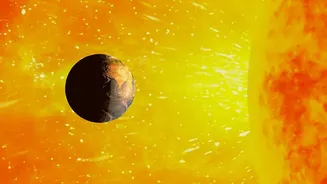
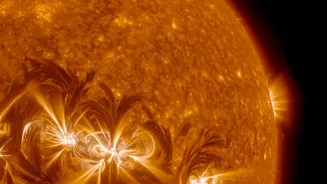
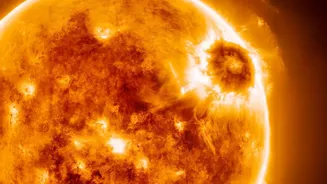
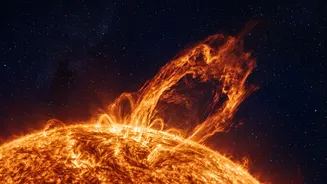
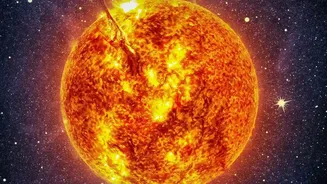
A solar storm occurs when the sun ejects a massive burst of energy and plasma, known as a coronal mass ejection (CME) or a solar flare. If Earth is in the path of one of these events, the consequences can be severe. These storms can induce powerful electrical
currents in our upper atmosphere, capable of crippling the very infrastructure that powers modern society. The most famous example is the 1859 Carrington Event, a solar superstorm that set telegraph stations on fire. If a storm of that magnitude were to hit us today, it could lead to widespread and long-lasting blackouts, disable satellite communications, disrupt GPS navigation, and potentially trigger what some scientists call an “internet apocalypse” by damaging undersea cables.
The Challenge of Looking into the Sun
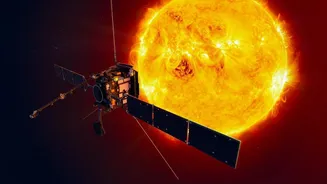
For decades, predicting these events has been incredibly difficult. We could see a storm erupt, but forecasting its path and arrival time was fraught with uncertainty. Recent studies have revealed just how complex these storms are. In late 2024, a fleet of 17 spacecraft accidentally tracked a single CME and discovered it had a lopsided, asymmetric shape. A dangerous, high-speed component of the storm was completely hidden from Earth's direct line of sight. This shocking discovery highlighted a major vulnerability: we couldn't prepare for a threat we couldn't see coming. This uncertainty is precisely what NASA’s new initiatives aim to solve.
An AI Shield Called DAGGER
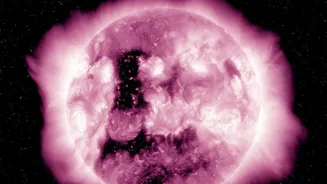
One of the most promising new tools is an AI model called DAGGER (Deep Learning Geomagnetic Perturbation). Instead of just watching the sun, DAGGER analyzes real-time data on the solar wind—the stream of particles constantly flowing from the sun. By training on vast amounts of historical data from NASA missions, the AI learned to identify the subtle patterns that precede a geomagnetic disturbance on Earth. The result is a system that can predict the location and severity of a solar storm's impact anywhere on the globe, with a 30-minute advance warning. This model, whose development was led by Indian researcher Vishal Upendran, can generate a new forecast in less than a second, updating every minute.
A Multi-Layered Forecast
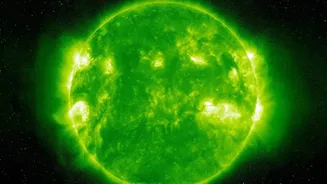
DAGGER is just one part of a broader strategy. NASA is developing a suite of AI tools that work together to create a forecast that begins right at the sun's surface. A new model from the COFFIES science center, announced in August 2026, can predict the emergence of volatile sunspots up to 12 hours before they appear. Another AI, named Surya and developed with IBM, uses years of solar imagery to predict solar flares up to two hours before they happen. Together, these systems create a chain of warnings, tracking a potential storm from its very conception to its eventual arrival at our planet, giving us more time to prepare at each step.
New Eyes on the Solar System
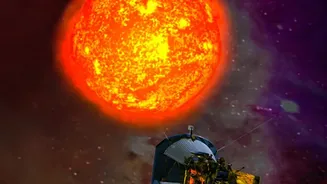
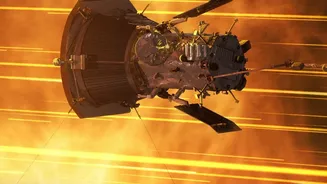
This advanced software is powered by better hardware. NASA's PUNCH mission, which launched in 2025, uses a constellation of four spacecraft to create continuous 3D observations of the inner solar system. This provides a much clearer picture of how a CME travels and evolves on its journey to Earth. In its first major test in 2026, PUNCH helped forecast a storm's arrival with an accuracy of within 30 minutes. This is a tenfold improvement over previous methods, which could only offer a vague five-hour window. This level of precision transforms space weather forecasting from a rough estimate into an actionable alert system.
What a 30-Minute Warning Can Do
While 30 minutes may not sound like much, in the context of a solar storm, it is a game-changer. This lead time is enough for power grid operators to re-route power and protect vulnerable transformers. Satellite operators can put their spacecraft into a protective safe mode to prevent electronic damage. Airlines can reroute flights away from polar regions where radiation exposure would be highest. For a nation like India, with its rapidly growing digital economy and ambitious space program including the Aditya-L1 solar observatory, this capability is not just beneficial—it is essential for protecting national infrastructure and future aspirations.