




A Junkyard Above Our Heads
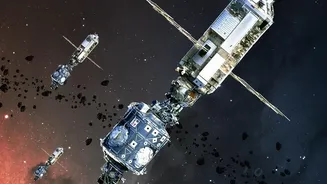
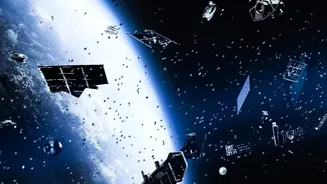
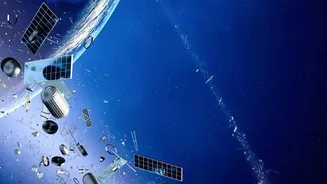
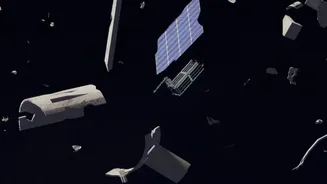
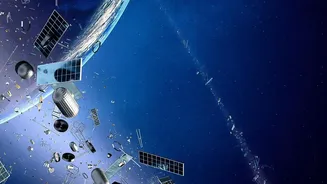
Imagine a highway where millions of tiny, untracked projectiles are travelling at over 28,000 kilometres per hour. Now imagine that highway is orbiting Earth, and it's home to the satellites that power our daily lives, from weather forecasting and GPS
navigation to global communications. This is the reality of space debris. The European Space Agency estimates there are over a million fragments larger than a centimetre orbiting our planet. Any one of these could catastrophically damage or destroy a multi-million dollar satellite, creating even more debris in a cascading chain reaction known as the Kessler Syndrome. The threat is no longer theoretical. ISRO, India's space agency, performed a record 140 collision-avoidance manoeuvres in 2025 alone, a dramatic increase that highlights the growing risk to its assets. This escalating danger makes clear that manual, ground-controlled intervention is becoming unsustainable.
India’s New Proactive Defence
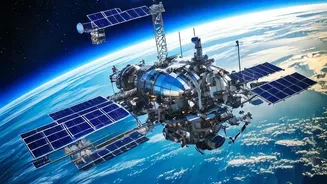
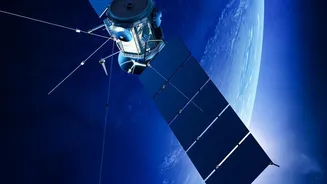
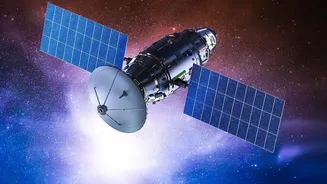
In response to this growing threat, Indian space-tech is moving from a reactive to a proactive strategy. The focus is shifting towards developing autonomous systems that can think for themselves. The headline technology is a new generation of satellite propulsion systems—or thrusters—integrated with artificial intelligence. These are not the powerful rockets used for launch, but smaller, highly efficient engines designed for precise orbital adjustments. Indian startups like Bellatrix Aerospace and Manastu Space are at the forefront, developing indigenous thruster technologies, including Hall-effect thrusters and green propulsion systems, which are crucial components for agile satellite movement. The goal is to equip satellites with their own onboard 'brain' and 'reflexes' to dodge danger without waiting for commands from Earth.
From Manual Intervention to AI Reflexes
Traditionally, avoiding a collision is a labour-intensive process. Ground control stations track potential threats, analyse collision probabilities, and then manually command a satellite to fire its thrusters to move out of the way. This process takes time, uses precious fuel which shortens a satellite's lifespan, and can lead to a temporary loss of service as the satellite’s instruments are shut down. Autonomous AI thrusters revolutionise this model. By integrating AI directly into the satellite, the system can continuously monitor its surroundings, predict the trajectory of nearby debris in real-time, and make instantaneous decisions. If a threat is detected, the AI can calculate and execute the most fuel-efficient avoidance manoeuvre on its own. This is the difference between a driver seeing an obstacle a kilometre away and a system that automatically swerves at the last millisecond with perfect precision.
How the AI 'Brain' Works
The AI at the heart of this system functions as a sophisticated space traffic controller. It processes vast amounts of data from various sources, including ground-based radar and its own sensors, to build a dynamic 3D map of its orbital environment. Indian startups like Digantara are specialising in this field of 'space situational awareness', developing AI-based software to detect patterns and assess risks. The AI uses machine learning algorithms, trained on countless simulations and historical data, to predict the future position of both the satellite and any potential threats. When the probability of a collision crosses a critical threshold, the AI autonomously engages the satellite's thrusters, executing a pre-calculated, optimised burn to nudge it onto a new, safe trajectory. It’s a constant, vigilant watch that a human team on the ground simply cannot replicate 24/7 for every single asset in a growing constellation.
Securing India's Future in Space
Developing this autonomous capability is not just about protecting existing satellites; it's a strategic investment in India's future in the burgeoning space economy. The cost of space debris is a hidden tax on the entire industry, driving up insurance premiums and operational expenses. By pioneering solutions that mitigate this risk, India positions itself as a leader in sustainable space operations. These technologies make Indian satellites more robust, reliable, and commercially attractive. Furthermore, as India plans more ambitious missions, including large satellite constellations and long-duration space exploration, the ability for these assets to self-protect becomes mission-critical. This innovation secures India's multi-billion dollar investment in space and signals its transition from a space-faring nation to a space-leading one.