







The Allure and Agony of Offbeat Travel
There's a special kind of thrill in venturing beyond the well-trodden tourist trails. The desire to find an untouched beach, a serene mountain village, or a forgotten historical site drives countless travellers across India. These lesser-known places
offer a sense of discovery and authenticity that popular destinations, often crowded and commercialised, can lack. However, the romance of the destination is often preceded by the headache of planning. For anyone who has tried to organise a trip to a remote location, the challenges are familiar: a scarcity of reliable information, outdated travel blogs, non-existent online booking for homestays, and uncertainty about local transport and safety. This information vacuum often makes spontaneous trips difficult and detailed planning a frustrating exercise in guesswork. Travellers are left piecing together fragments of advice from various sources, never entirely sure of what to expect upon arrival.
Digital Solutions from the Source
Recognising this gap, the Ministry of Tourism and various state governments have been pushing a digital-first approach to make travel planning more seamless. The goal is to create a reliable, centralised ecosystem of information and services that travellers can trust. A key player in this initiative is the revamped 'Incredible India' digital platform and mobile app. Billed as a comprehensive travel companion, it aims to provide everything from destination discovery to itinerary planning using AI-powered tools. Another critical tool, especially for reaching remote areas, is the Indian Railways' 'UTS on Mobile' app. This application allows passengers to book unreserved tickets on their smartphones, a crucial feature for accessing parts of the country where last-mile train connectivity is key and advance reservations are not always practical. These government-backed platforms are designed to bring authenticity and official verification to the travel planning process.
How These Tools Actually Help
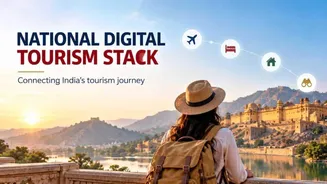
The true value of these digital tools lies in their ability to solve practical problems for travellers. The Incredible India platform, for instance, uses AI to generate personalised travel plans based on interests like wellness, adventure, or heritage tourism. It provides information on officially recognised tour operators and hotels, which helps build trust. Recently, the government also launched the National Digital Tourism Stack in collaboration with the Open Network for Digital Commerce (ONDC). This initiative aims to create a unified network where even small, local providers like homestays and guides can list their services and become discoverable across multiple platforms, breaking their reliance on single, often expensive, booking sites. For connectivity, the UTS app simplifies the process of buying local train tickets, eliminating the need to stand in long queues, which is especially useful when catching connecting trains in unfamiliar towns. The app uses GPS to allow for paperless ticketing within a certain radius of the station, making the process smoother for tech-savvy travellers.
Beyond Bookings to Building Ecosystems
These initiatives go beyond just simplifying bookings; they aim to build a more inclusive and sustainable tourism ecosystem. By bringing lesser-known destinations and small-scale service providers into the digital fold, the government hopes to distribute tourist traffic more evenly across the country. This helps in promoting local economies and preserving the cultural and environmental fabric of these areas. The 'Dekho Apna Desh 2.0' campaign, launched alongside the digital stack, specifically focuses on encouraging tourists to explore destinations beyond the usual hotspots. State governments are also launching their own platforms, like the 'UP Eco Tourism' app, which provides detailed information on natural heritage sites, trails, and responsible travel guidelines, complete with an AI itinerary planner and safety features. These tools empower local communities and offer travellers a direct window into authentic experiences, verified and supported by official bodies.
The Road Ahead and Remaining Hurdles
Despite the promise, the road ahead is not without its challenges. The effectiveness of any digital tool in remote India is contingent on reliable internet connectivity, which remains a significant hurdle in many parts of the country. User experience is another critical factor; some users have reported that apps can be clunky or face server issues. For these platforms to succeed, they must be consistently updated, user-friendly, and truly comprehensive. The information on 'hidden gems' needs to be genuinely insightful, going beyond generic descriptions. However, the direction is a positive one. By creating a unified, trusted digital infrastructure, these government-led tools have the potential to revolutionise how we discover and experience the incredible diversity of India.