



Why Your Dryer Is Wool's Worst Enemy
Before we get to the right way to dry wool, it’s crucial to understand what goes wrong. The two biggest culprits in ruining a perfectly good sweater are heat and agitation. When wet wool fibres are exposed to high heat from a tumble dryer or a radiator,
their natural scales lock together, causing the garment to shrink and felt. This process is irreversible. Similarly, the tumbling action of a dryer and the pull of gravity from hanging a heavy, wet garment can stretch the fibres, permanently distorting the shape, leaving you with droopy shoulders and a saggy hem. Air-drying is the only method that gently preserves the integrity and shape of the knit.
The Pre-Drying Step You Can't Skip
A freshly washed wool garment holds a surprising amount of water. Lifting it straight from the basin can cause it to stretch under its own weight before you even start drying. The goal is to remove as much excess moisture as possible without wringing or twisting the fabric. The most effective method is the towel roll. Lay a clean, thick towel flat on the floor. Place your wet sweater on top of it, gently smoothing it out. Then, starting from one end, roll the towel and sweater up together like a sleeping bag. Press down firmly along the length of the roll; you can even step on it gently. The towel will absorb a significant amount of water. For heavier knits, you may want to repeat this step with a second dry towel. Your sweater should now be damp, not dripping wet.
The Gold Standard: Drying Flat
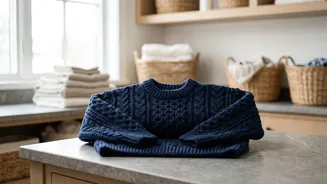
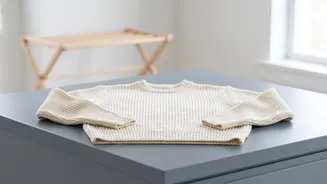
Almost every expert agrees: the single best way to dry a knitted wool garment is to lay it flat. This method completely supports the sweater, preventing gravity from pulling it out of shape. Find a flat surface, like a bed, a table, or a special mesh drying rack. Mesh racks are ideal as they allow air to circulate underneath, speeding up the process. Lay a fresh, dry towel down first to protect the surface and absorb any remaining moisture; choose a light-coloured towel to avoid any dye transfer. Unroll your damp sweater onto the towel and take a moment to gently reshape it. Line up the seams, smooth out the sleeves, and adjust the collar and hem to their original shape. Now, simply leave it to dry naturally, away from direct sunlight or heat, which can cause fading and make fibres brittle.
Patience Is a Virtue
Drying wool takes time, often 12 to 24 hours or more, depending on the thickness of the knit and the humidity in the room. To speed things up safely, you can place a fan nearby to improve air circulation or use a dehumidifier in the room. It's also a good idea to flip the garment over every few hours to ensure it dries evenly and doesn't develop a musty smell. Whatever you do, resist the temptation to hurry the process with direct heat, like a hairdryer or a radiator. Uneven, fast drying can damage fibres and lock in distortion. Before folding and storing, make sure the sweater is completely dry, paying special attention to thicker parts like cuffs and collars, as any trapped moisture can lead to mildew.
What About Hanging?
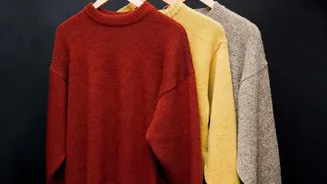
In general, you should never hang a wet or damp knit sweater. The weight of the water will pull the fibres downwards, resulting in a longer body, stretched-out shoulders, and unsightly 'hanger humps'. However, there are exceptions. Very lightweight wool garments might be okay on a rack. Woven wool items, like tailored trousers or jackets, are different from knits and can typically be hung on a sturdy hanger to dry. If you are ever in a situation where you have absolutely no flat space, there is a specific way to hang a sweater to minimise stretching: fold the sweater in half vertically, drape the body over the bar of a sturdy hanger with the armpit area at the hook, and then fold the sleeves over the other side. This distributes the weight more evenly, but flat drying remains the superior and safer choice.