






From Reactive to Proactive
Traditionally, managing large gatherings at concerts, festivals, or religious sites was a reactive practice. Security teams relied on manual headcounts, radio communication, and staff physically positioned at high vantage points. This approach often meant
responding to problems like bottlenecks or dangerous overcrowding only after they had already started. The core strategy was one of containment rather than prevention, limited by what human eyes could see and how quickly people could communicate. While effective to a degree, this model left significant gaps, as human operators can suffer from fatigue and are unable to monitor hundreds of camera feeds simultaneously. The fundamental shift today is from this reactive posture to a proactive one, driven by a suite of digital tools.
The All-Seeing Eye of AI
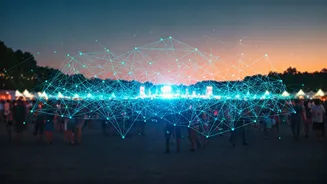
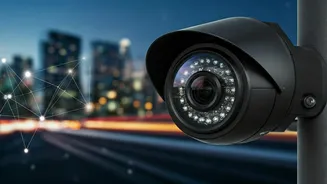
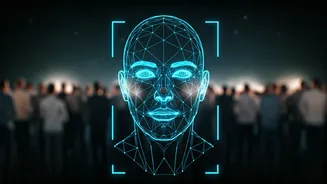
At the heart of modern crowd management is Artificial Intelligence, particularly computer vision. AI-powered cameras are now capable of much more than simple recording. These systems can analyse live video feeds to perform real-time density monitoring, identifying how crowded an area is and even how quickly it is filling up. By processing data on-site, these systems can detect anomalies in crowd behaviour—such as sudden panic, a person moving against the flow, or an unattended bag—and send instant alerts to a central command centre. This allows security personnel to intervene precisely when and where they are needed, often before a situation escalates. Some systems can even create visual heat maps, giving operators an intuitive, color-coded view of crowd concentration in real-time.
The Power of Predictive Analytics
Perhaps the most significant leap forward is the move into predictive analytics. This is less like having a crystal ball and more like sophisticated forecasting. By analysing massive amounts of data—including historical patterns from past events, ticket sales, weather forecasts, and even social media sentiment—AI algorithms can predict potential issues before they occur. For instance, an algorithm might forecast a surge at a particular entrance at a specific time, allowing organisers to allocate more staff or open additional entry points in advance. Some advanced systems use 'digital twins', which are virtual replicas of a venue, to run simulations. Organisers can test different crowd control strategies, like evacuation routes or barrier placements, in the simulation to see what works best before implementing them in the real world.
Drones and IoT: The View from Above
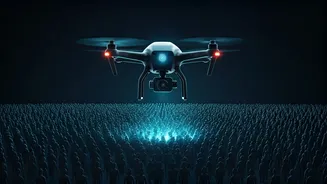
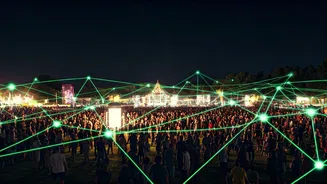
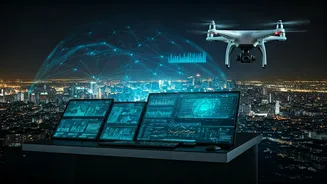
Drones, or Unmanned Aerial Vehicles (UAVs), have become a game-changer, offering a flexible and mobile bird's-eye view that fixed cameras cannot match. They can be deployed quickly to monitor large areas, identify bottlenecks in real-time, and help coordinate emergency responses on the ground. Drones can be equipped with high-resolution and thermal cameras, providing crucial data day or night. This aerial surveillance is complemented by the Internet of Things (IoT). A network of sensors—measuring motion, pressure, or even sound—can be embedded throughout a venue to feed a constant stream of data into the central system. This data provides a granular, real-time understanding of how people are moving through a space, enabling everything from dynamic rerouting to more efficient deployment of sanitation staff.
The Human Element and Future Challenges
While technology provides powerful new capabilities, it is designed to augment, not replace, human judgment. These tools empower security and event staff, freeing them from the difficult task of manual monitoring to focus on decision-making and customer service. However, this digital evolution is not without its challenges. The high cost of advanced systems can be a barrier for smaller organisers. More importantly, the use of widespread surveillance, AI analysis, and facial recognition raises significant ethical and privacy concerns. Striking the right balance between ensuring public safety and protecting individual rights will be a critical, ongoing conversation as these technologies become more widespread and integrated into our public spaces. The future will involve navigating these complex issues to ensure the digital era of crowd management is both safe and responsible.