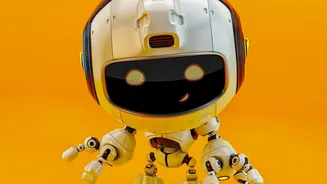







Think of AI as a Partner, Not a Ghostwriter
The most important rule is to treat AI as a supplement, not a substitute for your own brain. Think of it as a study buddy or a very advanced calculator. It can help you organise your thoughts, explain tough concepts in simple terms, or check your grammar,
but it should never do the core work of thinking and writing for you. Your teachers want to see your unique perspective and critical analysis, things an AI cannot produce. Using it to replace your effort undermines the entire purpose of education and is a form of plagiarism.
Smart Ways to Use AI for Learning
So, what are the ethical ways to use AI? It can be a powerful assistant for several tasks. Use it to brainstorm ideas for a project or paper when you feel stuck. Ask it to summarize long articles or lecture notes to help you grasp the main points. If you're struggling with a complex topic, like a scientific theory or a historical event, you can ask an AI to explain it in different ways until it clicks. You can also create practice quizzes or flashcards to prepare for exams, turning your notes into active study tools.
The Plagiarism Pitfall and How to Avoid It
Directly copying and pasting text from an AI and submitting it as your own work is plagiarism, plain and simple. To avoid this, always use the information from AI as a starting point. Your final work should be in your own words and reflect your own understanding. Some instructors and institutions may require you to cite your use of AI, just as you would cite a book or a website. This transparency is key to maintaining academic integrity. When in doubt, always ask your teacher about their specific policy on using AI tools.
Fact-Check Everything: AI Can Be Wrong
Generative AI tools are powerful, but they are not perfect and can make mistakes. They sometimes invent facts, create fake sources, or provide outdated information in a phenomenon known as "AI hallucination". It is crucial to treat AI-generated content with a healthy dose of skepticism. Always verify the information it gives you by cross-checking it with reliable sources like textbooks, academic journals, or trusted websites. You are ultimately responsible for the accuracy of the work you submit, so never take what an AI says at face value.
Communicate With Your Educators
The rules around AI in education are still evolving, and teachers have different expectations. The best approach is to be open and honest. If you are unsure whether using AI for a particular task is acceptable, ask your instructor for clarification before you begin. Many educators appreciate this transparency and would rather guide you on how to use these tools effectively than try to catch students misusing them. Building this trust helps create a better learning environment where technology is used to support, not circumvent, genuine effort.