



The Soul of Comfort Food
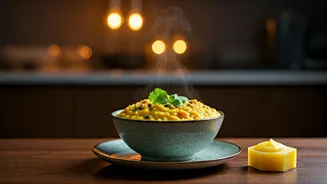
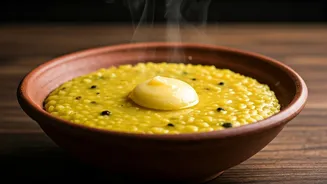
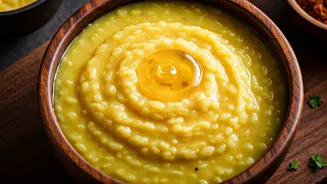
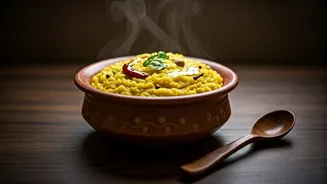
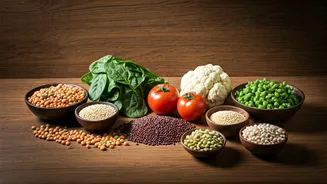
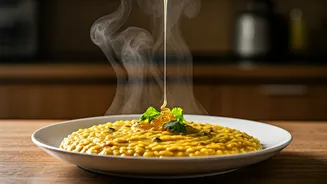
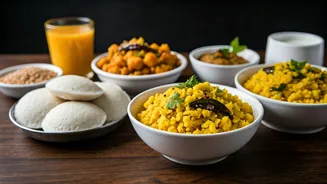
For generations, a warm bowl of dal khichdi has been the ultimate Indian comfort food. Made from rice and lentils, it's the dish we turn to when we're sick, tired, or simply craving a taste of home. [9] Its power lies in its simplicity. But a khichdi without
ghee is just a bland mix of rice and dal. [2] Traditionally, a generous dollop of ghee is not just an addition but an essential component, transforming the humble dish into something deeply flavourful and nourishing. It adds a rich aroma, provides a glossy texture, and carries the flavour of the spices. [6, 7]
First, Let's Understand 'A2' Ghee
The term 'A2' has become a buzzword in health circles, but what does it actually mean? The difference lies in the type of protein found in the milk. Milk from indigenous Indian cow breeds like Gir and Sahiwal contains a protein called A2 beta-casein. [3, 5] In contrast, milk from most crossbred or foreign cow breeds contains A1 beta-casein. The key difference is how they digest. During digestion, A1 protein can break down into a peptide called BCM-7, which some people find difficult to process, leading to bloating or discomfort. [1, 5] A2 protein does not release this peptide, making it generally easier on the gut and a better choice for those with dairy sensitivities. [1, 3] This is why A2 ghee is often considered a purer, more digestible option.
The 'Wood-Pressed' or 'Bilona' Advantage
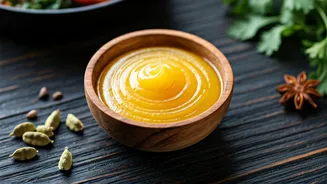
The second part of this upgrade is the traditional method of ghee-making, often involving wooden churners. Authentic, high-quality A2 ghee is typically made using the 'Bilona' method. [8, 15] This ancient process is slow and deliberate. First, fresh A2 milk is boiled and set into curd. [11] This curd is then churned—often with a wooden churner called a 'bilona'—to separate the butter (makhan). [12, 17] Finally, this butter is slow-cooked over a low flame until the water evaporates and the milk solids separate, leaving behind pure, golden ghee. [12, 18] This gentle, low-heat process is crucial as it preserves the nutrients, rich aroma, and natural grainy texture that is lost in modern, industrial methods where ghee is made quickly from cream. [8, 15]
Why It's the Perfect Match for Dal Khichdi
When you combine the qualities of A2 ghee made via the bilona method, you get a product that is nutritionally and gastronomically superior. Its smoke point is high (around 250°C), making it perfect for preparing the 'tadka' of cumin and hing without burning the spices or the fat. [2] The slow cooking of the bilona method gives the ghee a distinctly nutty, rich aroma that mass-produced ghee simply cannot replicate. [15] When you pour this fragrant, golden liquid over hot khichdi, it doesn’t just add fat; it adds a layer of complex flavour. [7] Furthermore, ghee is rich in fat-soluble vitamins like A, D, E, and K, and adding it to your dal helps your body better absorb these essential nutrients from the entire meal. [6, 20]
More Than Just Taste: A Nod to Wellness
In Ayurveda, ghee is considered a 'Rasayana'—a rejuvenating food that nourishes the body and mind. [21] Adding high-quality ghee to dal is said to help balance the Vata dosha, making the meal more grounding and calming. [7] The butyric acid naturally present in ghee supports gut health and can aid digestion, which is why khichdi with ghee is recommended for easy digestion. [6, 19] By choosing wood-pressed A2 ghee, you are not just making a culinary choice; you are embracing a tradition rooted in wellness. You are choosing an ingredient that is ethically sourced, minimally processed, and designed by nature to be nourishing. [22]