






The Science of Living Light
At its heart, bioluminescence is nature’s own light show. It's a chemical reaction within a living organism that produces light, the same process that allows fireflies to sparkle and deep-sea creatures to illuminate the ocean depths. For decades, scientists
have dreamed of harnessing this natural phenomenon for human use. The basic components are an enzyme called luciferase and a light-emitting molecule, luciferin. When they interact with oxygen, light is produced. The challenge has always been to transfer this ability into a stable, self-sustaining system outside of its native organism.
From Fungi to Flora: The Genetic Leap
Early attempts to create glowing plants involved genes from fireflies or marine bacteria, but these often required external chemicals to trigger the glow and were very faint. The major breakthrough came from an unexpected source: mushrooms. Scientists discovered that the bioluminescence pathway in certain fungi is remarkably compatible with the natural metabolism of plants. By carefully inserting genes from these luminous mushrooms into the DNA of a common plant, they enabled the plant to produce its own light continuously. This genetic modification allows the plant to convert caffeic acid, a compound it naturally possesses, into luciferin, creating a self-powered, living lamp that glows 24/7.
The Promise of a Greener Glow
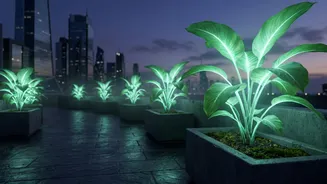
The potential benefits for municipalities are enormous. Street lighting accounts for a significant portion of a city's electricity bill and carbon footprint. In India, the push for energy-efficient LED streetlights under the Smart Cities Mission has already demonstrated the large-scale savings possible. Bioluminescent plants could take this a step further, offering lighting that requires zero electricity. This would not only lead to massive power savings but also reduce reliance on the grid, decrease greenhouse gas emissions, and cut down on light pollution that harms wildlife and obscures the night sky. Furthermore, these living lights would absorb carbon dioxide during the day, actively cleaning the air while preparing to illuminate the night.
From Lab Concept to Commercial Product
What was once a laboratory dream is now a commercial reality, albeit on a small scale. US-based biotech company Light Bio has successfully marketed the 'Firefly Petunia,' a genetically modified plant that emits a soft glow, primarily from its flowers and buds. After receiving approval from the USDA, these plants became available to the public, marking a major milestone in consumer biotechnology. While currently sold as a novelty houseplant, the company and other researchers are actively working on increasing brightness and engineering a wider variety of glowing plants, including orchids and sunflowers. Recent progress by scientists in China has expanded the number of species that can be made to glow, signalling a growing global interest in the technology's applications.
Hurdles on the Path to Illumination
Despite the excitement, several challenges remain before glowing trees replace our streetlamps. The primary issue is brightness. The light emitted by current bioluminescent plants is soft and gentle, often described as similar to moonlight. It is not yet intense enough to illuminate a busy road, where bright, reliable light is essential for safety. While perfect for parks, pathways, or ambient architectural lighting, significant improvements are needed for high-intensity applications. Longevity, resilience in harsh urban environments, and public acceptance of genetically modified organisms in public spaces are other factors that need to be addressed as the technology matures.