


A strong back is the foundation of good posture and pain-free daily movement. The seated row is a fantastic exercise to build that strength, and its true power lies in its adaptability, allowing for steady progress by gradually adding resistance.
What is the Seated Row?
The seated
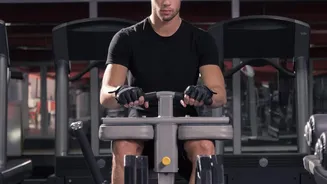
row is a classic strength training exercise performed on a cable machine, or with equipment like resistance bands. You sit with your feet braced and pull a weighted handle or band toward your torso in a horizontal line. It's a compound movement, meaning it works multiple muscles at once, making it an efficient and highly effective choice for strengthening your upper body. Because it’s performed in a stable, seated position, it is generally safe for beginners and places very little strain on the lower back, allowing you to focus purely on the pulling motion.
The Muscles Behind the Movement
The primary job of the seated row is to build a powerful and defined back. The main muscles targeted are the latissimus dorsi (the 'lats'), which are the large, fan-shaped muscles that give your back its width. It also heavily recruits the rhomboids and middle trapezius, the muscles situated between your shoulder blades that are crucial for good posture and pulling your shoulders back. Secondary muscles, or 'helpers', in this exercise include the biceps, forearms, rear deltoids (the back of your shoulders), and the erector spinae muscles in your lower back, which work to keep your torso stable and upright.
Mastering the Perfect Form
Proper form is crucial for maximising results and preventing injury. Sit tall on the bench with your feet firmly on the platform and a slight bend in your knees. Grasp the handle with your arms fully extended, keeping your chest up and your spine neutral. Before you pull, engage your core and draw your shoulder blades back and down. Initiate the movement by driving your elbows straight back, keeping them close to your body. Pull the handle towards your lower abdomen until your elbows pass your torso, squeezing your back muscles at the peak of the contraction for a moment. Then, slowly return the weight to the starting position with control, allowing your shoulder blades to stretch forward without rounding your back.
The Art of Gradual Progression
The key to getting stronger is a principle called 'progressive overload', which means continually challenging your muscles. The seated row is perfect for this because you can easily adjust the resistance. Once you can comfortably complete your target number of repetitions (for example, 3 sets of 10-12 reps) with perfect form, it's time to increase the challenge. You can do this by adding a small amount of weight to the stack, aiming to perform the same number of reps. Alternatively, you could increase the number of repetitions with the same weight or add an extra set to your workout. The goal is to make small, consistent increases over time to ensure your back muscles are always adapting and growing stronger.
Variations for Every Fitness Level
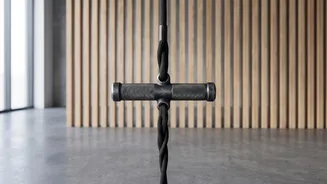
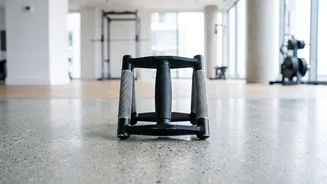
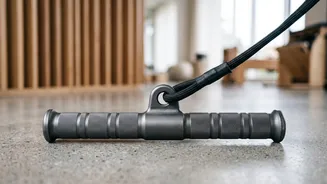
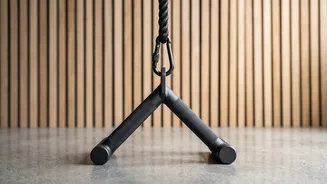
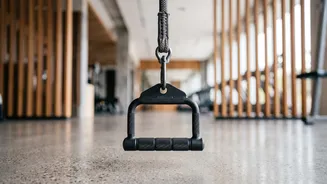
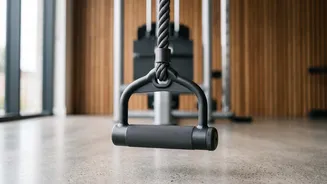
Not everyone has access to a cable machine, but the seated row pattern can be replicated with other tools. A popular at home alternative is the seated resistance band row. Simply sit on the floor with your legs extended, loop a resistance band around the soles of your feet, and pull the ends toward your torso just as you would with a cable machine. You can also perform variations with dumbbells, such as the single arm dumbbell row or a chest supported row on an incline bench. Different handles on a cable machine, like a wide bar instead of a V grip, can also shift the focus slightly, targeting the upper back and rear deltoids more directly.
Common Mistakes to Avoid
To get the most out of every rep, be mindful of common errors. The biggest mistake is using momentum by swinging your torso back and forth; this takes the work off your back muscles. Keep your torso relatively still. Another frequent error is shrugging your shoulders up towards your ears, which engages the upper traps instead of your mid back. Focus on keeping your shoulders down and away from your ears. Finally, avoid pulling with your arms and biceps. Instead, think of your hands as hooks and concentrate on driving your elbows back to initiate the pull—this ensures your back is doing the work.