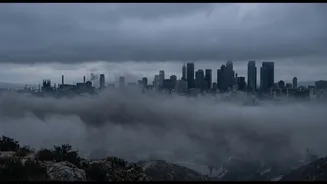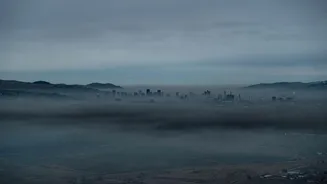




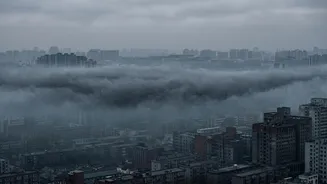
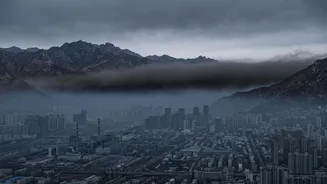
Ever notice how, on some winter days, a thick, brownish haze blankets the city, making the air feel heavy and breathing difficult? This isn't just morning fog; it's often the result of an invisible weather event trapping pollution right where we live.
How Air Normally Behaves
On a typical day, the air closest to the ground is warm. As it warms, it rises, carrying pollutants from traffic, industry, and other sources upwards and away from the surface. This process of atmospheric convection works like a natural ventilation system. Cooler, denser air from above sinks to take its place, creating a constant cycle that helps disperse emissions and maintain air quality. This vertical mixing is crucial for clearing the air we breathe in and around urban centres, preventing the buildup of harmful substances at ground level.
What is a Temperature Inversion?
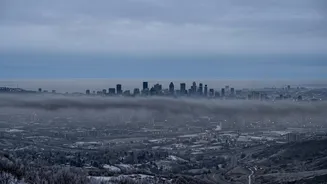
A temperature inversion flips this normal process on its head. It occurs when a layer of warmer air forms above a layer of cooler air near the ground. This often happens on clear, calm nights, especially during winter. The ground radiates heat and cools down quickly after sunset, chilling the air closest to it. The air higher up, however, remains warmer. This warm layer acts like a lid or a cap, because the cooler, denser air below cannot rise through it. The atmosphere becomes stable and stagnant, stopping the vertical mixing that would normally clean the air.
Creating a Pollution Trap
When a temperature inversion sets in over a city, this atmospheric 'lid' traps everything that is emitted at ground level. All the daily pollutants—exhaust from cars and buses, emissions from factories and power plants, dust from construction sites, and smoke from biomass burning—are stuck in the shallow layer of cold air. Unable to disperse upwards, these pollutants accumulate, causing their concentrations to increase dramatically. The longer the inversion lasts, and the lower the 'lid' is, the more concentrated and dangerous the pollution becomes. This is why air quality can deteriorate so rapidly, often over just a few hours overnight and into the morning.
The Chemical Recipe for Smog
This trapped pollution doesn't just sit there; it transforms. When sunlight hits this stagnant soup of pollutants, particularly nitrogen oxides (NOx) and volatile organic compounds (VOCs) from vehicle exhaust and industrial emissions, a series of chemical reactions occurs. This process, known as photochemical reaction, creates ground-level ozone (O3), a highly reactive and harmful gas. This newly formed ozone, along with fine particulate matter (like PM2.5) and other pollutants, forms the toxic brownish haze we call photochemical smog. It's not just fog; it's a complex mixture of secondary pollutants created right in the air we breathe.
Serious Risks to Public Health
Breathing in ground-level ozone and fine particulate matter carries significant health risks. Ozone, a powerful oxidant, can be thought of as causing a 'sunburn' on the lungs, leading to inflammation, coughing, chest tightness, and shortness of breath. It can trigger asthma attacks and worsen other respiratory conditions. Fine particulate matter is even more insidious; these tiny particles can penetrate deep into the lungs and even enter the bloodstream, contributing to respiratory infections, cardiovascular problems like strokes and heart attacks, and even premature death. Children, the elderly, and people with pre-existing lung or heart conditions are especially vulnerable to these effects.
Why Indian Winters Are a Perfect Storm
In many parts of India, particularly the Indo-Gangetic Plain, winter conditions are ideal for creating these pollution traps. The combination of cooler temperatures, calm winds, and longer nights promotes the formation of strong temperature inversions. These meteorological factors coincide with increased emissions from heating, as well as seasonal sources like post-harvest crop burning and festival fireworks. The region's geography, with the Himalayas acting as a barrier, can further prevent the dispersal of pollutants. This creates a predictable and severe annual air quality crisis, turning major cities into smog hotspots every winter.