





The 'Walmart of Healthcare' Philosophy
At the heart of Dr. Devi Shetty's argument is a simple but profound idea: a hospital can be run with the same ruthless efficiency as a factory or a supermarket. He is famously nicknamed the 'Henry Ford of heart surgery' for applying mass-production concepts
to healthcare. His core belief is that if you want to make a solution accessible to millions, it must be affordable. 'If a solution is not affordable, it is not a solution,' he has often stated. This led to the creation of Narayana Health, a hospital network built on the premise that kindness and compassion need a sustainable business model to reach the masses. The goal was never to build just another hospital, but to create a system that could fundamentally dissociate healthcare from wealth.
Harnessing the Power of Scale
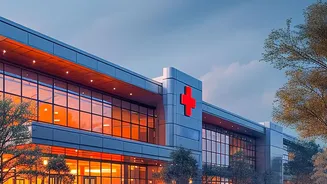
The first pillar of Shetty's model is 'economies of scale'. In simple terms, the more you do something, the cheaper it becomes to do it. While other hospitals might perform a handful of heart surgeries a day, Narayana Health's flagship 'health city' was designed to handle dozens. This high volume allows the hospital to negotiate hard with suppliers for bulk discounts on everything from sutures to stents, cutting out intermediaries and reducing procurement costs. Furthermore, it allows for extreme specialization. Surgeons and their teams perform the same procedures over and over, becoming incredibly efficient and skilled, which reduces errors and time in the operating room. This 'assembly line' approach means that expensive equipment is used constantly, not sitting idle.
Tackling Inescapable Fixed Costs
The second pillar is the aggressive management of fixed costs. Every hospital has massive fixed expenses: the building itself, expensive machinery like MRI and CT scanners, and staff salaries. These costs remain the same whether the hospital treats 10 patients or 100. Dr. Shetty's insight was to maximize the use of these assets. For example, a CT scanner has a limited lifespan of a few years regardless of use. By running it for 16 hours a day and performing 80 scans instead of just three, the cost per scan plummets. This principle is applied across the board. Operating theatres are used for longer hours, and salaried doctors are encouraged to be highly productive, performing more procedures than the industry average. This spreads the high fixed costs over a much larger number of patients, dramatically lowering the price of care for everyone.
The Forecast: A Tech-Driven, Insured Future
Looking ahead, Dr. Shetty forecasts that healthcare costs in India will continue to fall over the next five to ten years. He believes India will become the first nation to prove that a country's wealth has nothing to do with the quality of care its citizens can enjoy. This future is built on two key trends. The first is technology. Shetty is a proponent of digital health, telemedicine, and even Artificial Intelligence (AI) to make doctors more productive and care safer, not to replace them. The second, and perhaps more crucial element, is insurance. He has been a pioneer of micro-insurance schemes, like the Yeshasvini program for farmers in Karnataka. His forecast is that within a decade, a combination of government schemes and innovative private insurance—potentially offered by hospitals themselves to align interests—will ensure most Indians have coverage to afford quality care.
Challenges on the Path to Affordability
The model is not without its challenges and critics. Some have raised concerns that a relentless focus on cost-cutting and high volume could lead to corner-cutting on safety or poor working conditions for staff. Scaling the model requires not just building hospitals, but also ensuring a steady supply of highly trained doctors, nurses, and technicians willing to work within this high-productivity system. Furthermore, the success of the cross-subsidy model, where wealthier patients paying for premium services help cover the cost for the poor, depends on attracting a steady stream of those higher-paying customers, including medical tourists. Sustaining high quality alongside high volume and low cost remains a delicate balancing act that requires constant innovation and rigorous process control.