


Meet the Roman Space Telescope
While the headline hints at an imminent launch, the next-generation observatory in question is the Nancy Grace Roman Space Telescope, named after NASA's first chief of astronomy. Currently, its launch is scheduled for no later than May 2027. This successor
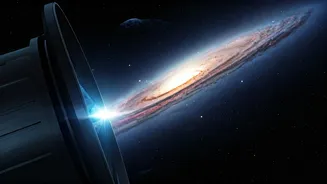
to the Hubble and companion to the James Webb Space Telescope (JWST) has a completely different mission. Instead of zooming in on tiny patches of the sky to see deeper, Roman is designed to zoom out, capturing enormous swathes of the cosmos in a single glance. It's less of a microscope and more of a wide-angle panoramic camera for the universe.
A Different Kind of Vision
Think of it this way: if Hubble and JWST are portrait photographers, capturing stunning, detailed images of individual galaxies or nebulae, the Roman Space Telescope is a landscape photographer. Its primary instrument, the Wide Field Instrument, has a field of view 100 times larger than Hubble's. In one shot, it can capture an area of the sky equivalent to the size of the full moon. This capability will allow it to map the structure and evolution of the universe on a scale never before possible. Instead of spending months creating a deep field image of one small spot, Roman will survey huge sections of the sky, creating a massive cosmic census of galaxies and stars.
Chasing Two Great Cosmic Mysteries
Roman’s grand survey has two primary targets. The first is one of the biggest puzzles in physics: dark energy. This mysterious force is believed to be responsible for the accelerating expansion of the universe. By measuring the precise locations and distances of millions of galaxies across cosmic time, Roman will help scientists create a 3D map of the universe's evolution. This map will allow them to test theories about dark energy and understand its role in shaping the cosmos. The second major goal is to conduct a massive census of exoplanets—planets orbiting other stars. Using a technique called microlensing, Roman will be sensitive enough to find thousands of new worlds, including 'rogue' planets that drift through space untethered to a star.
The Tech That Makes It Possible
Beyond its vast field of view, Roman carries another game-changing piece of technology: a coronagraph. This instrument is designed to demonstrate technology that can block out the overwhelming glare of a star, allowing a telescope to directly image the much fainter planets orbiting it. While the coronagraph on Roman is primarily a technology demonstration, it paves the way for future missions specifically designed to find and characterize Earth-like planets around nearby stars. It’s a crucial stepping stone in the search for life beyond our solar system. The combination of its wide-field survey power and its planet-imaging technology makes Roman a uniquely powerful tool for modern astronomy.
Why This Telescope Matters for India
Space exploration and astronomy have always captured the imagination of people in India, from the success of ISRO's Chandrayaan and Mangalyaan missions to a vibrant community of amateur astronomers. The data from the Roman Space Telescope will be publicly available to scientists all over the world, including India's leading astrophysicists and research institutions. The vast datasets it produces will fuel discoveries for decades, offering Indian scientists a front-row seat to solving mysteries like dark energy and discovering new types of planetary systems. It represents a global collaboration in our shared quest to understand our place in the universe, a mission that resonates deeply with India's own scientific ambitions.