




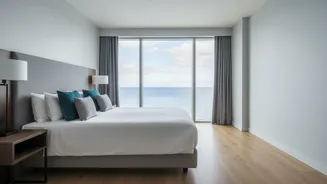

Understanding 'Accessible': The Standard Features
When a hotel labels a room as "accessible," it generally means it complies with specific standards designed to accommodate guests with disabilities. These features are fairly consistent and focus on in-room mobility and safety. An accessible room typically
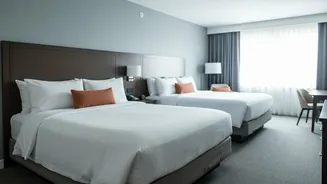
includes wider doorways (at least 32 inches) to accommodate a wheelchair, sufficient clear floor space for turning, and a bathroom equipped with grab bars, a roll-in shower or a tub with a seat. Controls for lighting and temperature are often lowered, and beds may be at a height suitable for transferring from a wheelchair. For guests with hearing impairments, rooms may have visual alerts for the doorbell and fire alarms. While these features are essential for a safe and comfortable stay, the standards often don't explicitly cover outdoor spaces like balconies, creating a common and frustrating blind spot for travellers.
The Balcony Blind Spot: Why It's Often Overlooked
A balcony can be a wonderful amenity, but it frequently presents accessibility barriers that travellers may not anticipate. One of the most common issues is the threshold of the sliding glass door. A high track can make it impossible for a wheelchair to roll over it without assistance. Furthermore, the doorway itself may not be wide enough. Even if you can get onto the balcony, the space might be too narrow to manoeuvre a wheelchair comfortably, defeating the purpose of having it. In many cases, especially in older buildings, balconies were not designed with accessibility in mind, and retrofitting them is not always a priority for hotels. This discrepancy between an accessible interior and an inaccessible exterior space is why the term "accessible room" can be misleading. It highlights that accessibility isn't always a comprehensive guarantee, but often a checklist of legally required interior features.
Your Pre-Booking Action Plan
The single most important step to avoid disappointment is to be proactive and verify everything before you book. Never rely solely on a website's general description or a third-party booking site's filter. Start by shortlisting hotels that claim to have accessible rooms, but then, pick up the phone and call the hotel directly. Speaking with a front desk agent or a manager allows you to ask specific, detailed questions that go beyond a simple checkbox. This direct communication is the most reliable way to confirm that the hotel's amenities will truly meet your individual needs. Don't assume the person on the other end of the line understands the nuances of accessibility; be prepared to explain exactly what you require.
Key Questions to Ask Before You Commit
When you call the hotel, have a list of specific questions ready. This transforms a vague inquiry into a fact-finding mission. Ask for details about the path to the balcony: "Is there a step or a lip at the balcony door? If so, what is the exact height of the threshold?" Follow up by asking for the clear width of the balcony doorway. Once you've confirmed you can get onto the balcony, ask about the space itself: "What are the dimensions of the balcony? Is there enough room for a wheelchair to turn around?" To eliminate any doubt, ask the hotel staff to take photos or even a short video of the room, the bathroom, and the balcony access with their phone and email them to you. Getting visual confirmation is one of the best ways to ensure there are no surprises upon arrival.
Confirm in Writing and Know Your Next Steps
After your call, ask the hotel to send you an email confirming all the specific accessible features you discussed, including the guaranteed accessible balcony. Having this information in writing is invaluable. It serves as proof of the hotel's commitment and can be a crucial reference if the room you're given at check-in doesn't match what was promised. Some hotels may say your request is just a "note in the system," which is not a guarantee. Insist on a firm confirmation. If you arrive and the room is not as described, speak to the front desk manager immediately. Calmly present your confirmation email and explain the discrepancy. Being prepared with documentation empowers you to advocate for the accommodation you were assured you would receive.