





What Happened on Flight AI 2030?
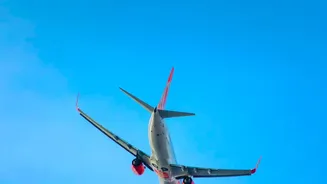
On October 14, Air India flight AI 2030 was on its way from Frankfurt to Delhi with 293 passengers and 13 crew members on board when a serious alert was triggered. Air Traffic Control (ATC) systems on the ground received a 'Squawk 7500' code from the aircraft—the
universal signal for a hijacking or unlawful interference. In line with strict security protocols, authorities immediately responded. The Boeing 787-9 aircraft was diverted to Jaipur International Airport, where it was moved to an isolated bay after landing safely. All passengers and luggage were deplaned for thorough security checks before the flight was finally cleared to continue its journey to Delhi. The alert was confirmed to be false, but the crucial question remained: what caused it?
The Unconfirmed Software Glitch
While initial speculation pointed towards an accidental activation by the pilots, this theory was quickly challenged. Senior pilots have described the chances of inadvertently keying in the four-digit code as 'one in a trillion', as it must be entered manually and is not a single button that can be pressed by mistake. The flight crew also reportedly denied transmitting the code, telling controllers that everything on board was normal. This discrepancy has shifted the focus of the investigation towards the ground systems. Investigators are now closely examining a new ATC system recently installed in Mumbai, suspecting a potential software or radar malfunction may have generated the false alert. This remains a key line of inquiry for the Directorate General of Civil Aviation (DGCA), though officials have stressed it is too early to draw conclusions.
Official Response and Investigation
India's aviation authorities have launched a comprehensive probe into the incident. The DGCA, the country's aviation regulator, is leading the investigation to determine the root cause of the false alarm. In a statement, Air India confirmed the diversion was due to a 'perceived security concern' and that the aircraft and crew were cleared after checks by security agencies. The airline apologised for the disruption while reiterating that safety is its highest priority. Civil Aviation Minister K Rammohan Naidu has also commented on the incident, stating that any potential changes to security norms will only be considered after the investigation is complete and the facts are clear. For now, the focus is on a meticulous review of all records, including aircraft data, ATC logs, and controller communications, to piece together what went wrong.
How Technology Keeps the Skies Safe
This incident highlights the complex interplay of technologies designed to prevent disasters. The alert itself, 'Squawk 7500', is part of the transponder system that allows aircraft to identify themselves to ATC. While this system is ground-facing, commercial aircraft also have an independent onboard system called the Traffic Alert and Collision Avoidance System (TCAS). TCAS communicates directly with other aircraft to prevent mid-air collisions, operating as a last line of defense. It can issue a 'Traffic Advisory' (TA) to alert pilots to nearby aircraft or, more urgently, a 'Resolution Advisory' (RA) that gives direct commands like 'climb' or 'descend'. While the AI 2030 incident involved a hijack code, not a TCAS alert, it underscores the multiple layers of technology—both on the aircraft and on the ground—that must work perfectly to ensure passenger safety.