








The Scale of the 'Wastage'
This isn't a minor issue. The technical term for deliberately reducing power output is "curtailment." In the first quarter of the 2026-27 fiscal year alone, India curtailed a massive amount of renewable energy. For instance, between April and June 2026,
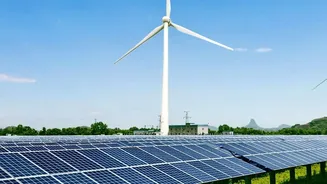
the country wasted 8,133 gigawatt-hours (GWh) of solar power to maintain grid security. To put that in perspective, in the last 15 months, the total solar energy curtailed was enough to power about 10 million homes. This happens even during periods of high demand, like the summer, when millions of air conditioners are running full blast. The problem is particularly acute in solar-rich states like Rajasthan and Gujarat, which have seen rapid growth in solar parks.
A Grid Built for a Different Era
The core of the problem lies in a mismatch: India is building 21st-century power sources but is often trying to push that power through a 20th-century grid. Transmission infrastructure development has not kept pace with the rapid commissioning of renewable energy projects. It can take two years or less to build a solar farm, but building the high-voltage transmission lines needed to carry that power can take three years or more. This creates bottlenecks, especially in regions with a high concentration of solar farms. When generation surges around midday, the existing lines simply don't have enough capacity to transport all the electricity to where it's needed, forcing grid operators to curtail output to prevent overloading.
The Challenge of Inflexible Power
The national grid must be perfectly balanced at all times, with supply matching demand exactly. Solar power is intermittent—it peaks at noon and disappears at night. The existing power system heavily relies on coal-fired power plants, which are designed for steady, continuous operation. These plants are relatively inflexible and cannot be ramped down and up quickly to accommodate the midday flood of solar power. When solar generation surges, it's often easier and safer for grid operators to curtail the solar output than to try and make a coal plant 'dance' by rapidly reducing its power. This leads to situations where clean, zero-fuel-cost solar power is wasted while coal plants continue to run.
The Missing Piece: Energy Storage
The most intuitive solution to the problem of midday solar surpluses is to store the energy for use in the evening when demand is high but the sun isn't shining. However, India's energy storage capacity is still in its infancy. Utility-scale battery storage systems, which can absorb excess generation and release it later, are not yet widespread. The primary barrier has been cost, though prices are falling. Without adequate storage, the grid has no way to 'time-shift' the abundant afternoon solar energy to the peak evening hours, leaving curtailment as one of the few available options to maintain stability.
What Are the Solutions?
Solving this paradox is crucial for India's energy future. The government and industry are actively working on a multi-pronged approach. A major focus is accelerating the construction of transmission infrastructure, including dedicated 'Green Energy Corridors'. There's also a significant push to add more battery storage to the grid to help absorb fluctuations. Furthermore, improving demand-side management—encouraging large industrial consumers to shift their power usage to midday, for example—can help align consumption with solar generation peaks. Spreading renewable projects more evenly across the country, rather than concentrating them in a few states, can also reduce pressure on specific transmission corridors.