



Tackling an Unimaginable Data Flood
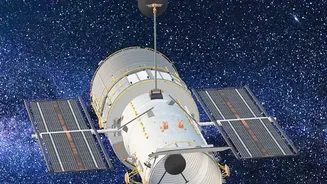
Modern space missions are, above all, data-gathering operations. Telescopes like the James Webb and the now-retired Kepler have generated an extraordinary record of our universe, but the sheer volume is staggering. NASA holds over 150 petabytes of data from
decades of missions, far more than scientists could ever analyze manually. This is where AI becomes crucial. Machine learning algorithms can sift through this torrent of information at incredible speeds, identifying patterns and anomalies that human eyes would likely miss. For example, AI models process data from the James Webb Space Telescope in days, a task that would have previously taken years, dramatically accelerating the pace of discovery. Tools like ExoMiner and RAVEN have been trained to analyze the light from millions of stars, leading to the confirmation of hundreds of new exoplanets by spotting the tell-tale dips in starlight that indicate a planet is passing by.
Smarter, Safer Robots on Distant Worlds
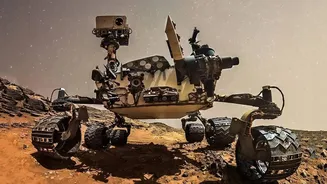
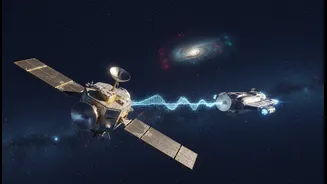
In deep space, communication is not instantaneous. A signal from Earth can take over 20 minutes to reach Mars, making real-time remote control of a rover impossible. This is why autonomy is not a luxury; it's a necessity. NASA's Perseverance rover on Mars relies heavily on AI to navigate the planet's surface. Using a system called AutoNav, the rover processes images from its cameras to identify hazards and plot its own safe route, allowing it to cover more ground in a day than older, more dependent rovers could. Recently, NASA has even begun using generative AI to help plan drive routes, and a technology called Mars Global Localization now allows Perseverance to pinpoint its own location without help from Earth, much like a planetary GPS. This level of AI-driven independence keeps the spacecraft safe and significantly increases the scientific return of a mission.
The Future of Mission Design and Operations
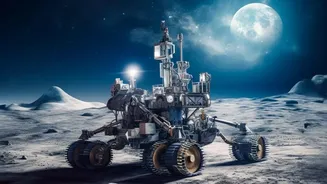
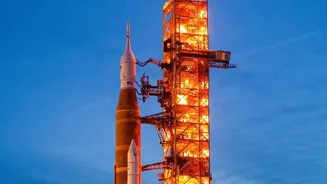
AI's role at NASA extends beyond active missions; it's also reshaping how future explorations are planned and executed. During the design phase, AI-enhanced simulations help engineers model millions of potential scenarios to optimize spacecraft trajectories and test for risks. The Artemis program, which aims to return humans to the Moon, is a prime example. AI is being used to assist with autonomous landings in the treacherous terrain of the lunar south pole and to support mission scheduling. Onboard AI systems can also monitor the health of a spacecraft, predicting potential system failures before they become critical. Looking ahead, NASA is exploring how AI can monitor astronaut health on long-duration missions and provide diagnostic support when immediate help from Earth isn't available. These intelligent systems are becoming the core operational backbone for complex missions.
A New Partner in Scientific Discovery
Ultimately, AI is fundamentally changing the nature of scientific inquiry. By automating the laborious process of data analysis and enabling more ambitious robotic missions, it frees up human scientists to focus on higher-level questions and interpretations. Initiatives like the Genesis Mission, a national effort to leverage AI for science, underscore this shift. NASA's participation aims to turn its vast data archives into engines of discovery, connecting information from different missions to reveal new insights about our planet and the universe. From predicting solar flares to analyzing climate patterns on Earth, AI is becoming a versatile and powerful tool. It is not replacing human ingenuity but augmenting it, creating a partnership that is pushing the boundaries of what is possible in our quest to understand the cosmos.