


September's Celestial Showcase
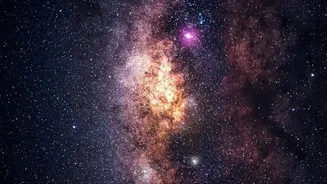
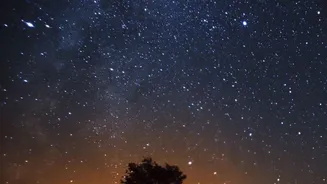
This September offers a rich calendar for sky-watchers. The month is one of the last chances in 2026 to see the core of our own Milky Way galaxy before it disappears from Northern Hemisphere skies until next spring. The best time for this will be around
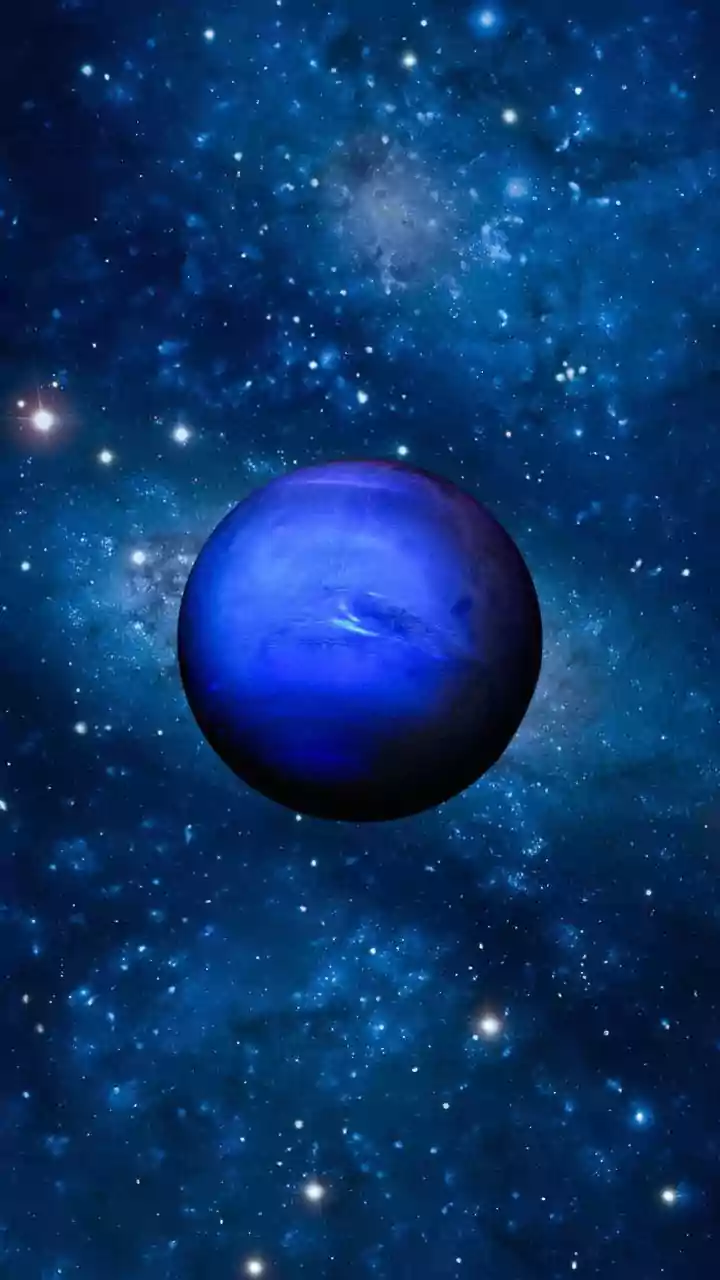
the New Moon on September 11-12, when the lack of moonlight creates the darkest possible conditions. Venus will be exceptionally bright, reaching its peak luminosity on September 18. You can also catch several planetary meetups: the Moon will have close encounters with Mars (September 6-7), Jupiter (September 8), and Venus (September 14). The month culminates with the Full Harvest Moon on September 26, which will rise in the evening sky alongside Saturn. On the same night, the distant planet Neptune will be at opposition, its closest point to Earth for the year, making it a target for those with good binoculars or a telescope.
The Problem with City Lights
The single biggest obstacle for most urban and suburban stargazers is light pollution. This is the glow from streetlights, buildings, and homes that floods the night sky, washing out all but the brightest celestial objects. This artificial brightness significantly reduces the contrast between stars and the background sky, making faint objects like nebulae, distant galaxies, and even the Milky Way completely invisible. In many Indian cities, the skyglow is so intense that only a handful of stars are visible from a balcony or rooftop. The problem is getting worse, with studies showing that the number of visible stars could dramatically decrease in the coming years due to increasing artificial light. Escaping this dome of light is the first and most important step to seeing the sky as it is meant to be seen.
Weather: More Than Just Clouds
While clouds are the most obvious weather-related spoiler for stargazing, they aren't the only factor. Even on a cloudless night, the quality of your view is determined by 'seeing' and 'transparency'. Transparency refers to the clarity of the air, which can be diminished by humidity, dust, and haze. In India, the period just after the monsoon can bring high humidity, creating a haze that dims faint stars. 'Seeing' refers to the stability of the atmosphere. Turbulence in the air, caused by wind and temperature differences, makes stars twinkle. While beautiful to the naked eye, this twinkling signifies poor seeing, causing objects viewed through a telescope to appear blurry and unstable, as if you're looking at them through rippling water. The best nights are often cold and calm, with low humidity.
Finding Your Dark Sky Spot
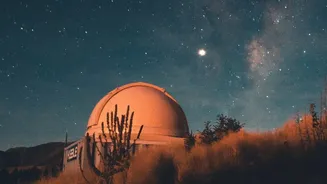
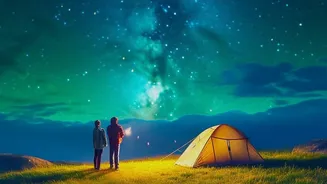
To truly appreciate September's sky, you need to get away from city lights. In India, this often means heading to high-altitude regions, remote deserts, or designated reserves. Places like Hanle in Ladakh, home to India's first official Dark Sky Reserve, offer world-class stargazing conditions due to their high altitude and dry, clear air. Spiti Valley in Himachal Pradesh and the Rann of Kutch in Gujarat are also renowned for their dark skies and vast, open horizons. For those unable to travel to such remote locations, even a trip to a nearby hill station, national park, or a rural area a few hours outside a major city can make a dramatic difference. The goal is to find a location where light pollution is minimal, allowing your eyes to fully adapt to the darkness.
How to Plan for Success
A successful stargazing trip requires planning. Start by targeting nights around the New Moon (September 11-12) for the darkest skies. Next, consult astronomy-specific weather apps like Clear Outside or Astrospheric, which provide forecasts not just for cloud cover, but also for transparency and seeing conditions. These tools are more useful than standard weather reports. Pack for the conditions; even on warm days, nights in remote or high-altitude areas can get cold. Finally, give your eyes time to adjust. It takes about 20 to 30 minutes for your eyes to become fully dark-adapted, revealing thousands more stars than were visible at first glance. Using a red-light torch will preserve your night vision while allowing you to see your surroundings.