








What is the Health Halo?
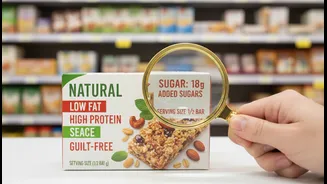
The 'health halo' is a psychological trick where one positive claim on a package makes us believe the entire product is healthy. Marketers use buzzwords like 'organic', 'multigrain', or 'high in protein' to create this illusion. This halo can lead us to overlook
high levels of sugar, sodium, or unhealthy fats lurking in the ingredients list. We see a single healthy attribute and our brain assumes the rest is good for us, too. This can cause us to consume more of a product than we otherwise would, thinking we're making a virtuous choice.
Decoding the Buzzwords
Food packaging is filled with terms designed to make products seem healthier than they are. Words like 'natural' can be misleading; sugar is a natural ingredient, but that doesn't make it healthy in large quantities. 'Multigrain' simply means more than one type of grain is used, but they might be highly refined, stripping away most of the fibre and nutrients. Even claims like 'no added sugar' can be tricky, as the product might still be loaded with natural sweeteners like fruit juice concentrate, which your body processes just like regular sugar. In India, the Food Safety and Standards Authority of India (FSSAI) has started to crack down on these misleading claims, pushing brands to be more honest on their packaging.
Case Study: Packaged Fruit Juice
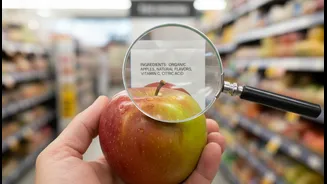
A glass of packaged fruit juice is often seen as a healthy start to the day. The box might show vibrant, fresh fruit, but the reality is often different. The process of turning fruit into juice strips out most of the dietary fibre, which is crucial for slowing down sugar absorption and making you feel full. What's left is essentially sugar water, or 'free sugars', which can cause your blood sugar to spike rapidly. While the juice contains vitamins, it lacks the full benefits of eating a whole fruit. You get the sugar and calories without the fibre that helps manage them.
Case Study: Granola and 'Healthy' Bars
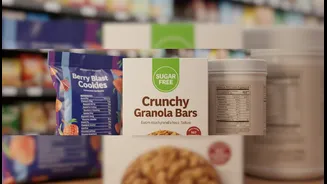
Granola bars and cereal bars are the ultimate convenience snack, often positioned as a wholesome source of energy. While some can be nutritious, many are essentially candy bars in disguise. They might be made with oats, nuts, and seeds, but they are often held together with various forms of sugar, from corn syrup to honey and dextrose. A single 'healthy' bar can contain as much sugar as a dessert. Experts suggest a simple test: check the ingredients list. If sugar or a type of syrup is one of the first three ingredients, it’s a red flag. A truly healthy bar should have a short list of recognizable ingredients and be low in added sugar.
Case Study: The 'Low-Fat' Myth
For decades, fat was painted as the enemy, leading to a boom in 'low-fat' and 'fat-free' products. However, when manufacturers remove fat, they also remove flavour and texture. To compensate, they often add sugar, salt, and artificial fillers. The result is a product that may have a similar or even higher calorie count than its full-fat counterpart and can be significantly less healthy due to high sugar content. Healthy fats, like those found in nuts, seeds, and avocados, are essential for feeling full and for overall health. Choosing a 'low-fat' version might mean you're trading a satisfying nutrient for empty calories from sugar, which can lead to cravings and overeating.
How to Become a Smarter Shopper
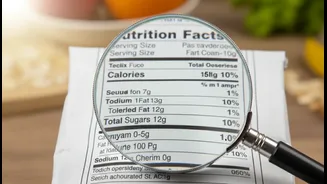
The best way to see through the health halo is to become a label detective. Ignore the flashy claims on the front of the box and turn the package over. Look at the nutrition facts panel and the ingredients list. Ingredients are listed by weight, so whatever appears first is the main component of the product. Pay close attention to 'added sugars' and be aware of sugar's many names, such as high-fructose corn syrup, dextrose, maltose, and cane juice. Check the serving size, which is often unrealistically small, to understand how many calories and how much sugar you are actually consuming.